7 Deadly Sins of Handling HDD Drill Rods: Dropping, Dragging, Over-Speeding
Hi folks, it’s me again, your friendly neighborhood HDD tooling guy from the factory. I’ve been doing this about five years now and if there’s one thing I’ve learned, it’s that drill rods have feelings too. I know, I know – crazy, isn’t it? But listen to me.
I remember the day I first realized it. Texas, about 4 years ago. Hot, miserable day. Crew was racing to complete a 200-foot bore under a two-lane highway. And then-CRACK. That terrible sound every directional driller dreads. The rod broke like a thin stick 15 feet down.” What was on the face of the operator? Total ruin. We pulled that sucker out for 14 hours. On its own, the downtime cost us close to three grand.
That was the time I stopped thinking of drill rods as indestructible steel pipes. Because they are not. They are more like your knees – beat them long enough and they will tell you.
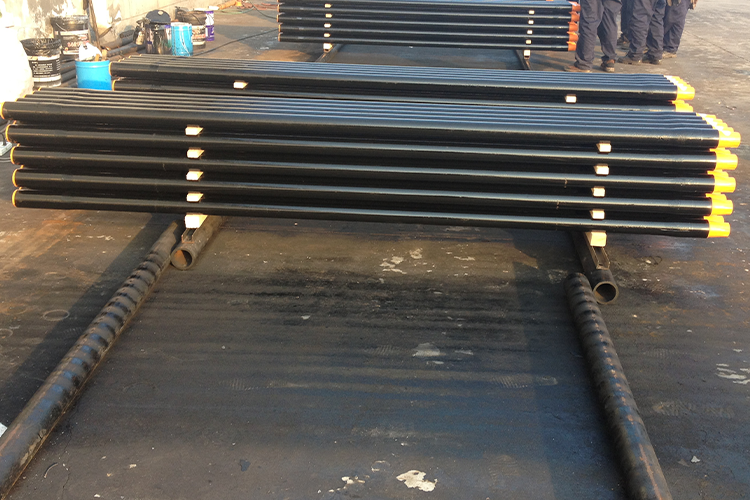
So today I want to talk about the 7 deadly sins of HDD drill rod handling. I don’t want to preach, I’ve done every single one of them myself at some point. But because I’d rather you learn from my mistakes than make them.
Sin #1: Treating Your Rods Like Kindling
I know, I know. You’re worn out. The end of a 14-hour shift. The rod falls off the rack or you are in a hurry and just let it go. Nothing big, right? That’s hard steel.
Incorrect.
Tool joint falls on ground and dents the shoulder? That’s not just cosmetic. That dent is an area of stress. And every time you tighten that connection, that little dent is working against you. And the problem with damage like that is sometimes you can’t see it. But the steel remembers.
A customer called me once, furious about “defective rods”. Drove three hours to his place, went over to his pipe rack, and scraped my fingernail across a groove worn halfway through the steel. “You’ve been losing them, haven’t you? He said nothing. For he knew it.
The answer is? Treat your rods like the instruments of precision they are. Don’t drop your drill rod if you wouldn’t drop your phone on concrete. Use appropriate equipment. Spare those extra 10 seconds.
Sin #2: Dumping them on the ground like a dead animal
This one is killing my soul. I see crews pulling rods over gravel, over concrete, through mud-puddles. They say, “It’s just scratches.”
No, my friend. That’s wear. That is material loss. Each time you pull a rod you wear off the outside diameter. The tool joint, which is the thick upset end to which the rods are attached, is the largest-diameter part of the drill string. It is also the part in permanent contact with the borehole’s wall. That takes the whole rub.
When that OD is below the minimum for the grade? That joint is finished, yet the body of the rod is still perfect.
I remember a crew hauling a new set of rods across a rocky yard to get to the rig. I wanted to weep. Those rods lost probably 10% of their useful life before they ever went in the hole. For what ? To save 30 seconds ?
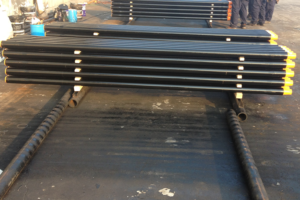
The fix: Pipe racks. Use rollers. Use sawhorses, old tires, whatever to get them up off the ground. Your rods will appreciate it. And your pocketbook will too.
Sin #3: Driving as if You Were in a Race
This one is literally a killer.
There is this little voice in your head that says, “Just push a little bit harder. Just turn it a little faster. “We’ll get it done quicker.
That voice is a lie.
When you over-speed your rotation you’re not creating productivity, you’re creating micro cracks. Do it long enough and you break. It’s that simple.
Your drill rod is often spinning at 100-300 rpms and pushed through the ground at an angle. The constant rotation and bending action of steering puts more fatiguing stress on your drill string. The scary part is fatigue can happen at stress levels that are way below what you’d normally consider “dangerous.”
It’s like taking a paper clip and bending it back and forth. Doesn’t crack after being bent once. Or the tenth. Or the 20th. But eventually? BANG.
The fix: Respect your torque and pull back limits. IADC recommends not to exceed 80% of the makeup torque rating. That’s your insurance policy. That’s the difference between pushing it and pushing your luck.
Sin #4.Don’t Overlook Your Bend Radius
I’ll admit it, this one still gets me sometimes. You’re in a long stretch of steer, the bore path is twisty and the rods are flexing more than a gymnast. They can take it … so far.
But every time you go beyond that recommended bend radius, usually 1.2-1.5 degrees per 30ft (check your spec), you’re work-hardening the steel. The more you do that the more the rod will get brittle.”
Rule of thumb: If it smells like fish, it is fish. Don’t bend the rod into a banana.
The fix: Chart your bore path. For a compact curve, it’s better to drill halfway, pull your equipment out and come in from the opposite angle. So that lightens the load a bit because you’re working at an angle that’s only half as tight.
Sin #5: Torque Composition Wrong
Oh my goodness. This is personal.
As a rookie, I over-torqued a connection like a maniac because I thought “tight is strong”. Nah. That’s how you start pulling threads and making cracks you can’t see.
Too loose? The link underground wrenches itself free. Too snug? You’re tugging on the threads like a rubber band until they snap.
I’ve done both those. Each time I felt like an idiot.
The maximum stress is in the weakest part of the chain of rods. And statistics show that fatigue is the cause of about 80% of drill pipe accidents in HDD, which is primarily related to the joint-thread and welding-line fractures.
The fix: Use the damn torque wrench. Not what feels right. Not what the guy beside me is doing. Period. The manufacturer’s specs.
Sin #6: Mixing Cross Brand and Wear Levels
It’s like putting a new tire on one wheel and a bald tire on the other and wondering why you are in the ditch.
Steel bends different. Threads wear at different rates. You had a pack of rods from Brand A and one more pack from Brand B? They may look the same They are not. Varying thread profiles. Various shoulder angles. Other steel. Bolt them together and you have a dog hitched to a cat. It will work for a spell. Then there’s blood.
The fix: One brand per string, or at least per size. And don’t mix used pipes with new ones machined perfectly. The new ones will prematurely wear to match the misshapen threads.
Sin #7: Failing to Clean Your Threads
This one is so simple it hurts.
Mud in the joints hardens like cement. That dried mud is like sand paper on your threads next time you thread up.
I always have a small wire brush in my back pocket, like a toothbrush for my rods. My wife is laughing at me. My drillers don’t. They never have stuck joints.
One grain of sand in there will gall your threads faster than you can say “breakout torque”. And galling? That is a cold weld between the surfaces of the threads during make-up.” On a micro scale the threads fuse. If you try to break the connection, rather than slide it, it will rip the metal.
The fix: Clean the threads . Everyone. Single. Time. I don’t care if it looks clean. Wipe it off. Brush it off. Blow it out. Then a light coat of thread compound. Not like butter on toast. Not like icing on a cake.
Straight Talk
Look, I ain’t gonna sit here and tell you our rods don’t break. They’re not magic. They’re steel. But you know who calls me least? The guys who treat their drill string as the precision instrument it is.
The ones who turn their lead rod in the rack once a week. Who mark and log each and every rod. They ran their hands over each rod, feeling for notches and grooves. Who don’t separate the joints all the way at the end of the day, and leave them hooked together overnight. Because moisture gets in, rusts up, and then the next morning you need a cheater pipe and a prayer.
Those guys? That’s not all they’re saving in terms of replacement rods. They’re avoiding the 2 AM calls. They’re not losing holes. They’re not pulling broken rods out of the mud.
And that’s what this is all about, at the end of the day. Not just a couple bucks on drill rods. It’s about coming home at a decent hour. It’s about not having to tell your boss why the job is two days late. It’s about getting a better night’s sleep.
So look after your rods. They will take care of you.
Now go get out there and drill safe. And for the love of all that is holy, wash your threads.
SHARE:
More Posts for You
- Machine Learning for Prediction of HDD Drill Rod Failure – What is Possible?
- How bad can a dogleg be ? HDD drill rod fatigue : what are the safe limits ?
- HDD Drill Rod Steel Price Impact on Costs: 2026 Market Outlook
- OEM vs Aftermarket HDD Drill Rods: Warranty, Liability & Performance

- How a Bent Sub or Worn Saver Sub Impacts Your Whole Drill Rod Inventory
- How Much is Your Old HDD Drill Rod Worth for Scrap? (Current Pricing Knowledge)
- 7 Deadly Sins of Handling HDD Drill Rods: Dropping, Dragging, Over-Speeding
- Urban Utility Drilling: Why Shorter, Stiffer HDD Drill Rods Are Often Better