HDD Drill Rod Steel Price Impact on Costs: 2026 Market Outlook
The factory’s been crazy — and honestly a big part of that has been answering the same question over and over from customers: “Why did my drill rod quote go up again?”
So I am just going to spill it all out.” Get a coffee.
When It Hit Me
I was sitting with a contractor, let’s call him Dave, who runs a pretty good-sized HDD outfit in the Midwest, about a year or so ago. Dave has been drilling for over fifteen years. He knows his rigs inside and out. But I sent him a revised quote for a full string of S135 rods and he called me up, half-joking, “Did you guys start pricing these in gold?
I chuckled. But then I pulled up the numbers on my screen and walked him through what had actually changed on our side.
That was the moment it clicked for me as well. Most people in this industry know that steel prices impact drill rod prices — but very few know how brutally, directly and disproportionately that effect hits.
Raw materials constitute about 60% of the total manufacturing cost of drill rods. That’s not a small number. That’s the whole point. When steel moves, everything moves.”
So What Really Happened in 2026?
The short version: steel prices went up, and they stayed up.
Before the wheels came off, the benchmark most of us follow, US hot-rolled coil (HRC) prices, were around $680/ton. By May 2026, they were at about $950-980 a ton. That’s a 43% increase.
Morgan Stanley now expects average HRC prices of $1,112 per ton in 2026 and expects prices to stay high through the second half of the year before moderating.
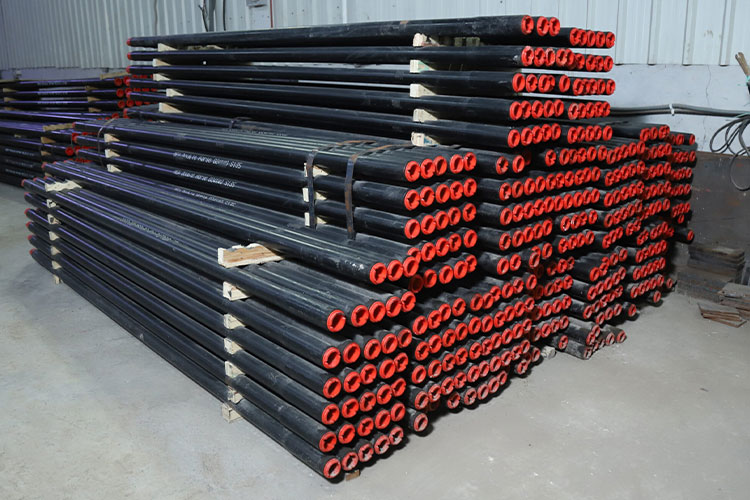
But here’s the thing that surprised a lot of people. It wasn’t just the raw steel price. The price of seamless tube, the material most drill rod bodies are made from, went up every single month in 2026. Seamless hit market prices of $2,574/ton in April. That’s a different universe than HRC.
And then the tariff layer.
The elephant in the tariff room
I am not going to profess to be an expert on trade policy, but I can tell you what I see on the ground.
Steel products – initially subject to tariffs of 25% – under Section 232 saw these tariffs increased to 50% effective June 2026, and now include the entire fabricated-article value rather than just the raw material portion.
Let me make that simple. Effective December 23, 2023, the applicable duty rate on imports of drill rods classified under HTS 7228.60.10.60 (hollow drill bars and rods of alloy or nonalloy steel) from China is the combined rate of Section 301 and Section 232 measures. The code in question from China now has a 75 percent rate in effect.
75 percent. Plus the cost of the base material.
Customers have asked me why I can’t just ‘absorb’ that. Believe me, if I could I’d. But if your raw material is already 60% of your cost and you’re looking at a 75% landed cost adder on top of a 43% steel price increase… there’s not a whole lot of margin left to absorb anything.
And it’s not just our industry. Chinese construction equipment giants XCMG, Sany, Zoomlion and LiuGong all announced around 5% price increases on excavators in May 2026 blaming “substantial increases in steel, oil products, rubber, copper and aluminum.” “When the big guys are passing costs through you know it’s legitimate.
The effect on your drill rod dollars
Let me give you the real numbers, because I know that’s what you came for.
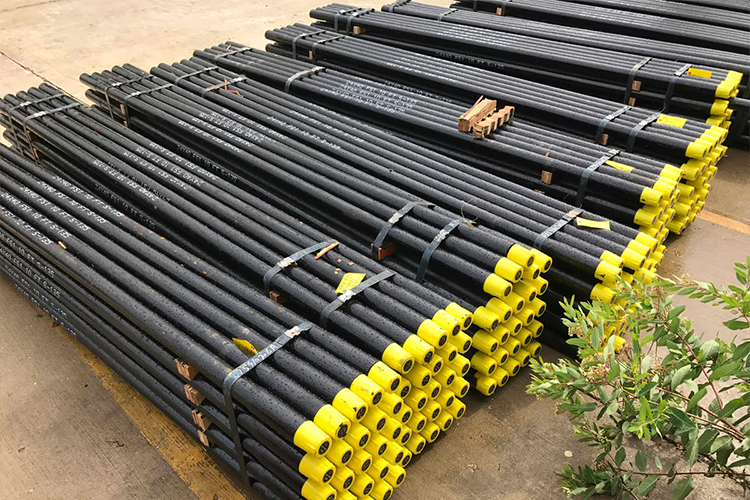
Here is what the new aftermarket HDD drill rod pricing looks like as of mid-2026:
Mini class (JT9/JT10/JT20, 6-10-ft rods): $209-$279 each, or $8,400-$11,200 for a full string
Utility-mid class (JT24, D20x22/D24x40, 10 ft) $249-$299/rod, or $10,000-$12,000/full string
Mid-heavy class (JT40, D40x55, 10-15 ft): $379-$549 each or $19,000-$33,000 for a full string
Heavy class (JT100, D60x90 and up, 15-20 ft) $519-$1,000+ per rod or $26,000-$60,000 for full string
These are the live retail prices for July 2026 from the online pipe channel. OEM branded pipe (Vermeer Firestick, Ditch Witch branded) commands 20-40% premium over quality aftermarket.
Now, this is where I want to stop you before you go shopping on price alone.
The Cost Per Foot Mindset (Dave’s Real Lesson)
And you go back to that conversation with Dave, after I walked him through the steel numbers, he went silent for a second. And then he said something that has stuck with me: “So the cheap rods I bought last year… I’ve already replaced half of them.”
That’s right.
In HDD drilling, the purchase price of the unit is not the decision that really matters. It is cost per drilled meter – the total life cycle of that rod during its working life.
It’s not a bargain if a rod fails 30% sooner but is $50 less upfront. It’s a burden.” And in a year when steel costs are already cutting into your margins, the last thing you need is to be swapping out rods more often than you need to.
S135 alloy steel, the standard for high torque, long distance HDD operations, is purpose-built for torque transmission stability and resistance to deformation. But its performance is very dependent on the homogeneity of heat treatment. Improper thermal processing produces residual stress zones that decrease fatigue life under cyclic loading. That is why the actual service lives of two rods of the same steel grade can be very different.
Drill pipe prices for the S135 grade are over 60% higher than for the E75 grade. But if your particular ground conditions allow the S135 rod to last twice as long, which is actually cheaper?
What I’m Seeing From the Factory Floor
I’ll be honest with you, 2026 has been a tough year to be a manufacturer.
We’ve been doing a couple of things to address it:
Security of steel supply. We’ve signed three-month price lock agreements with our key suppliers to hedge against short-term volatility. It doesn’t solve the problem but gives us and our customers a window to plan.
Process effectiveness. “We’ve been working to optimize heat treatment and minimize material waste by better forging techniques.” “Every percentage point of yield improvement helps take some of the raw material increase away.”
Transparency . Personally, this is the one for me. When the customer asks me why the price went up I show him the steel invoice. I show them how the tariff is calculated. I don’t veil myself in vague language. They deserve to know exactly where their money is going.”
So What Should You Do?
If you are planning to buy drill rods in the next 6-12 months, here’s my advice to you:
Place your orders early. Steel prices are forecast to remain high until the second half of 2026. If you know you are going to need rods, it may be worth getting a quote locked in now – even at a slightly higher price now – rather than waiting and paying more later.
Look at the total cost, not the sticker price. Discuss with your supplier the heat treatment process, the steel certification and the expected fatigue life. Those are more important than the per rod number.
Select your rig class and application. A mini-class rod at $209 and a heavy-class rod at $1,000 are for reasons totally different. Don’t over-spec for light duty, don’t under-spec for high torque jobs. Either way the wrong choice has more cost in the long run.
Ask about the steel source. Tariff rates differ by country of origin for the same HTS code, so the country where your rod’s steel is sourced can make a difference of thousands of dollars in the landed cost.
And One More Thing
I know the price increases are frustrating. This is frustrating for me as well. I’d much rather be discussing drilling efficiency and rod design than tariff rates and steel indexes. But this is the world that we all live in right now.
Here’s what I can tell you. We are not fattening our margins on the back of steel prices. We’re working tirelessly to keep price increases as low as possible and maintain the quality that keeps your rigs turning.
If you want to talk specifics – your rig class, your usual ground conditions, your annual rod consumption – get in touch with me. We’ll go over the figures and I’ll give you a straight answer.
That’s exactly what Dave and I did over a few phone calls. And he is still out there drilling, still buying rods, and we are still friends. So I must be doing something well.
SHARE:
More Posts for You
- Machine Learning for Prediction of HDD Drill Rod Failure – What is Possible?
- How bad can a dogleg be ? HDD drill rod fatigue : what are the safe limits ?
- HDD Drill Rod Steel Price Impact on Costs: 2026 Market Outlook
- OEM vs Aftermarket HDD Drill Rods: Warranty, Liability & Performance
- How a Bent Sub or Worn Saver Sub Impacts Your Whole Drill Rod Inventory
- How Much is Your Old HDD Drill Rod Worth for Scrap? (Current Pricing Knowledge)
- 7 Deadly Sins of Handling HDD Drill Rods: Dropping, Dragging, Over-Speeding
- Urban Utility Drilling: Why Shorter, Stiffer HDD Drill Rods Are Often Better