A Deep Dive into Horizontal Directional Drilling (HDD) Drill Pipe Lengths: Why There’s No Simple Answer
When planning a Horizontal Directional Drilling (HDD) project, one of the most common questions we hear is: “What is the standard length of a drill pipe?” While it seems straightforward, the answer reveals the very nature of HDD—a field built on flexibility and adaptation to specific job needs.
The short answer is: Common drill pipe lengths range from 10 feet to 40 feet, but there is absolutely no single “standard” size.
So, how do you choose? What makes the length so variable? This blog will break down the key factors that determine the right drill pipe for the job.
The Common Spectrum of Drill Pipe Lengths
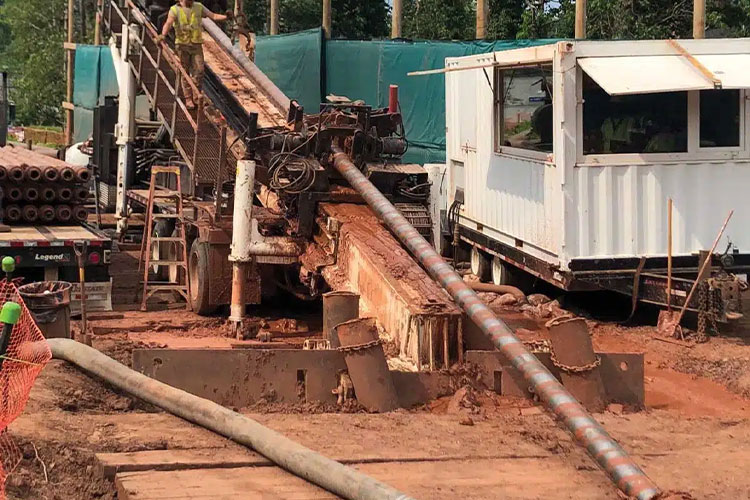
First, let’s look at the typical lengths you’ll find in the industry:
- Short Drill Pipes: 10 ft to 15 ft (3 m to 4.5 m)
- Best For: Small to mid-sized rigs, cramped urban settings, and the pilot hole phase where precise steering is critical.
- Key Advantage: Superior flexibility. They allow for more frequent steering corrections, making them ideal for navigating complex underground utility networks.
- Medium-Length Drill Pipes: 30 ft to 33 ft (9 m to 10 m)
- Best For: This is the most common and versatile size, used with a wide range of mid-size to large rigs.
- Key Advantage: Offers the best balance between drilling efficiency and on-the-ground maneuverability for a majority of projects.
- Long Drill Pipes: 40 ft and longer (12 m and longer)
- Best For: Large and mega-sized rigs tackling long-distance, big-diameter pipe installations (e.g., river crossings, major highway bores).
- Key Advantage: Dramatically reduces the number of connections, boosting overall productivity and shortening project timelines.
The 4 Key Factors Dictating Drill Pipe Length
Why can’t we just settle on one length? Because selecting a drill pipe is a technical decision, influenced primarily by these four elements:
1. The Drilling Rig’s Capability
This is the primary physical constraint. Every HDD rig is engineered with a maximum thrust/pullback capacity and torque. It is also designed to handle a specific range of pipe lengths and diameters. Using a pipe that exceeds the machine’s specifications can lead to equipment failure and safety hazards.
2. The Nature of the Project and Bore Length
- Short, Complex Bores: For a project in a congested city center that requires weaving around existing utilities, shorter pipes (e.g., 15 ft) provide the fine control needed for a tight turning radius.
- Long, Straight-Line Crossings: For a mile-long bore under a river, using 40 ft pipes can cut the number of connections by 75% compared to 10 ft pipes, leading to massive gains in efficiency.
3. Site Constraints and Footprint
Even the most powerful rig is useless without space to operate. In tight urban lots or inside industrial plants, there may not be enough room to store and handle 30 ft pipes. In these scenarios, shorter 10 ft or 15 ft pipes are the only practical option.
4. Ground Conditions
In hard, abrasive, or challenging geology, the drill string is subjected to immense stress and torque. Sometimes, shorter, more robust pipes or those made with special materials and treatments are required to withstand the harsh conditions and prevent a costly string failure.
Long vs. Short: The Trade-Off Between Efficiency and Flexibility
Choosing a pipe length is ultimately a balancing act:
Long Drill Pipes (e.g., 40 ft)
- Efficiency: High – Fewer connections mean faster average drilling progress.
- Flexibility: Low – They have a larger turning radius, making the bore path less precise.
- Space Needed: High – Requires a large, clear work area.
Short Drill Pipes (e.g., 10-15 ft)
- Efficiency: Low – Frequent stops to add new pipes slow down overall progress.
- Flexibility: High – They allow for agile steering and highly accurate bore paths.
- Space Needed: Low – Ideal for confined and restricted sites.
Conclusion and Key Takeaway
So, back to the original question: “What is the general length of an HDD drill pipe?” We can now give a more professional answer: It is entirely dependent on your specific rig, project requirements, and site conditions.
For many standard utility installations, the 30 ft pipe is the go-to, versatile workhorse. However, when planning your project, a comprehensive assessment is crucial:
- Consult Experts: Talk to your equipment supplier and an experienced drilling crew.
- Conduct a Thorough Site Survey: Understand the utility layout, soil conditions, and available space.
- Define Project Goals: Determine the bore length, depth, and required precision.
Selecting the right drill pipe is like choosing the right tool for any skilled job—it’s the first and most critical step to ensuring a safe, efficient, and successful HDD project. We hope this guide helps you make a more informed decision.
SHARE:
More Posts for You
- Treating Your HDD Drill Pipe Like a Friend (Not a Tool)
- When I Realized ZHE HDD Drill Pipes Just Click with Ditch Witch
- Get the Most Out of Your Vermeer D100x120: Why ZHE HDD Drill Pipes Are the Best
- How to Pick the Best HDD Drill Pipe for Your Ditch Witch JT60
- It’s Not Just the Vermeer Rig: Your Drill Rod Choice Changes Everything
- Keeping Your Vermeer D36x50 Happy: The Unspoken Truth About Drill Pipes
- Getting the Most Out of HDD Drill Rods for My Ditch Witch JT10
- How to Choose a Horizontal Directional Drilling Contractor