Does Temperature Have a Significant Impact on Drill Pipe Mechanical Properties?
If you’re involved in drilling operations, you know that every component of the drill string is pushed to its limits. We often focus on factors like torque, weight-on-bit, and pressure. But there’s a silent, pervasive factor that dramatically alters the game: temperature.
So, to answer the question directly: Yes, temperature has a massive and undeniable impact on the mechanical performance of drill pipe. Ignoring it isn’t just an oversight; it’s a risk to the entire operation.
Let’s break down exactly how heat turns up the pressure on your drill string.
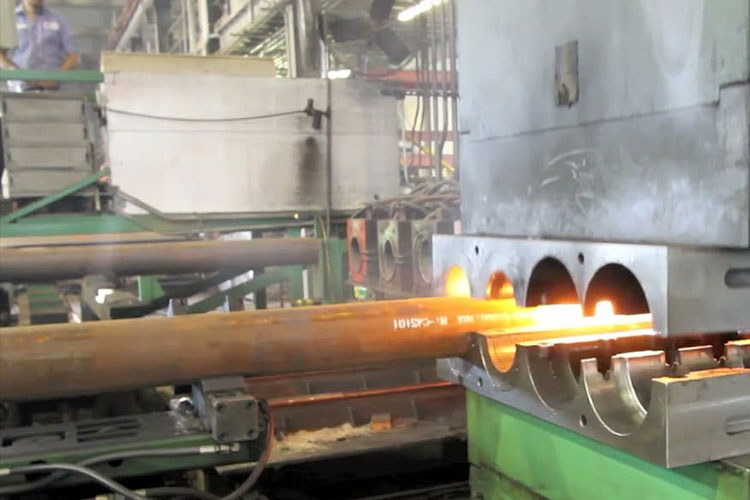
The Core of the Matter: How Temperature Changes the Metal
Drill pipes are typically made from high-strength, low-alloy steel. While incredibly tough, steel’s properties are not constant. As temperature increases, the fundamental behavior of the metal changes:
- Decrease in Yield and Tensile Strength: This is the most critical effect. The yield strength is the stress point at which the steel begins to deform permanently. At elevated temperatures, the atomic bonds in the steel weaken, making it easier to stretch and deform. A drill pipe that can handle a certain load at surface conditions may permanently bend or stretch under the same load in a high-temperature wellbore.
- Reduction in Hardness and Wear Resistance: High temperatures can anneal the steel, softening it. This reduces its resistance to abrasion from the wellbore wall, cuttings, and casing. In simple terms, your drill pipe wears out faster in a hot hole.
- Increase in Ductility: While a slight increase in ductility might sound like a good thing (making the pipe less brittle), it’s a double-edged sword. It contributes to the loss of strength and can make the pipe more susceptible to deformation under load.
The High-Temperature Downhole Environment
In deepwater, geothermal, or deep oil and gas wells, bottom-hole temperatures can easily exceed 150°C (300°F) and can push past 200°C (400°F) in extreme cases. At these temperatures, the derating of steel strength is significant. A pipe might lose 15-20% or more of its yield strength compared to its room-temperature rating.
This means your safety margins, carefully calculated on the surface, are eroding with every meter you drill deeper into the heat.
Real-World Consequences: What Can Go Wrong?
Underestimating temperature effects can lead to catastrophic failures:
- Pipe Sticking: A weakened, more ductile pipe is more likely to suffer from differential sticking or mechanical keyseating.
- Parted Drill String: If the actual load exceeds the temperature-reduced strength of the pipe, it can snap, leading to a costly fishing job or even loss of the well.
- Fatigue Failure: Temperature accelerates fatigue crack growth. A small flaw that is manageable at low temperatures can propagate rapidly in a hot, corrosive downhole environment.
- Tool Joint Failure: The connection threads are a critical point of weakness, and the stress concentration here is magnified by the loss of material strength at high temperatures.
The Other Extreme: Impact of Low Temperatures
It’s not just about heat. In arctic operations or during surface handling in winter, extremely low temperatures can make steel more brittle (reducing its fracture toughness). A pipe that is tough at room temperature can behave in a brittle manner when subjected to impact loads in a frigid environment.
So, What’s the Solution? Knowledge and Adaptation.
You can’t fight physics, but you can work with it.
- Material Selection: For high-temperature operations, specify drill pipes made from advanced alloys (like S-135 high-strength steel or higher) that are designed to maintain their strength and resist softening at elevated temperatures.
- Accurate Modeling: Modern drilling software can model the entire wellbore temperature profile. Use this data to derate the mechanical properties of the drill string along its entire length in your planning calculations. Don’t design based on surface-strength values.
- Operational Awareness: Monitor real-time data and be aware that your operating window (torque, drag, WOB) is narrower in a high-temperature hole than it is on paper.
The Bottom Line
Temperature is not a minor variable; it is a fundamental driver of drill pipe performance. Its impact on mechanical properties like yield strength, hardness, and ductility is profound and non-negotiable. For any drilling engineer, a thorough understanding of downhole temperature and its effects is essential for designing safe, efficient, and successful wells.
SHARE:
More Posts for You
- Treating Your HDD Drill Pipe Like a Friend (Not a Tool)
- When I Realized ZHE HDD Drill Pipes Just Click with Ditch Witch
- Get the Most Out of Your Vermeer D100x120: Why ZHE HDD Drill Pipes Are the Best
- How to Pick the Best HDD Drill Pipe for Your Ditch Witch JT60
- It’s Not Just the Vermeer Rig: Your Drill Rod Choice Changes Everything
- Keeping Your Vermeer D36x50 Happy: The Unspoken Truth About Drill Pipes
- Getting the Most Out of HDD Drill Rods for My Ditch Witch JT10
- How to Choose a Horizontal Directional Drilling Contractor