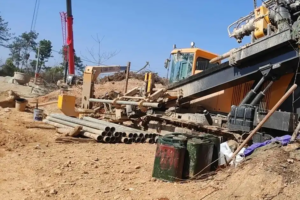
How to Use Vise Jaws in Horizontal Directional Drilling (HDD) Projects
Horizontal Directional Drilling (HDD) is a complex, trenchless method for installing underground pipelines, conduits, and cables with minimal surface disruption. Success hinges on precision, powerful machinery, and the often-overlooked tools that make the heavy lifting possible and safe. Among these critical components are Vise Jaws.
While the drill rig, reamer, and downhole tools get most of the attention, vise jaws are the unsung heroes of the jobsite, providing the essential grip and stability needed for key operations. Let’s explore their vital use cases in an HDD project.
What Are Vise Jaws?
Vise jaws are heavy-duty, replaceable clamping inserts mounted within a pipe vise or the rig’s built-in clamping system. They are typically made from hardened steel and feature serrated or profiled teeth designed to bite into and securely hold drill pipe, casing, or other cylindrical components without causing critical damage. Their primary job is to prevent rotation or axial movement during critical make-up (connecting) or break-out (disconnecting) of drill string components.
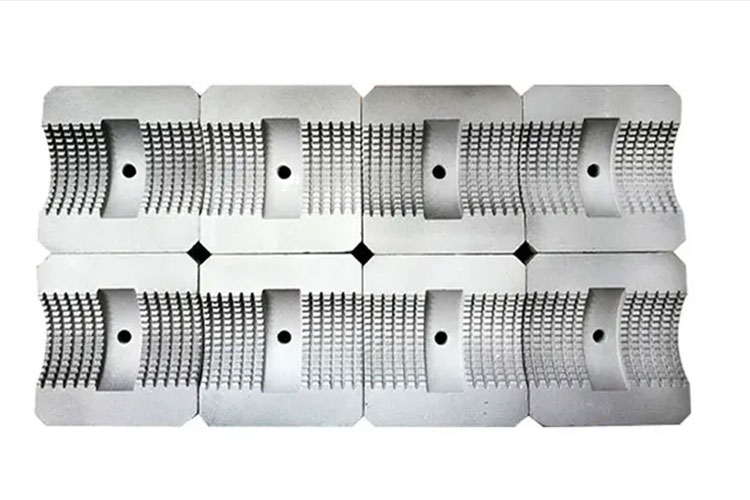
Key Use Cases for Vise Jaws in HDD
Making Up and Breaking Out the Drill String
This is the most frequent and critical application. The drill string (a series of connected drill pipes) is constantly being extended during drilling or retracted during product pullback.
- Process: The vise jaws clamp down firmly on a pipe in the string. Once secured, the rig’s rotary system (or a separate breakout wrench) applies torque to either tighten a new connection (“make-up”) or loosen an existing one (“break-out”).
- Importance: The jaws must provide an immovable hold. Slippage during high-torque operations is dangerous and can damage pipe threads.
Holding the String During Tool Changes
When switching between downhole tools—such as replacing a drill bit with a reamer, or adding a swivel—the entire weight and torque of the string must be managed.
- Process: The vise jaws grip the pipe just behind the tool connection. This allows crews to safely detach the tool, often using auxiliary wrenches, while the string is held firmly in place.
- Importance: Prevents the string from dropping into the borehole or spinning uncontrollably.
Securing Pipe for Handling and Preparation
Before a pipe is added to the string, it often needs preparation, such as cleaning threads, applying thread compound, or inspecting for damage.
- Process: A standalone pipe vise (equipped with its own vise jaws) is commonly used off the rig floor. It holds individual pipe joints horizontally, allowing crew members to work on them safely and efficiently.
- Importance: Enhances jobsite organization, safety, and preparation speed.
Stabilizing the Product Pipe During Pullback
In the final pullback phase, the product pipe (utility line) is attached to the reamer and pulled back through the pre-reamed hole.
- Process: As sections of product pipe are welded together (for HDPE) or joined, vise jaws in a pipe vise can be used to stabilize the stationary pipe, preventing it from rolling or moving during the welding/fusing process.
- Importance: Ensures alignment for high-integrity joints, which is crucial for the pipeline’s long-term performance.
Emergency or Controlled Hold
If a hydraulic failure occurs or a controlled pause is needed, engaging the vise jaws provides a mechanical lock on the string, serving as a safety backup to the rig’s primary systems.
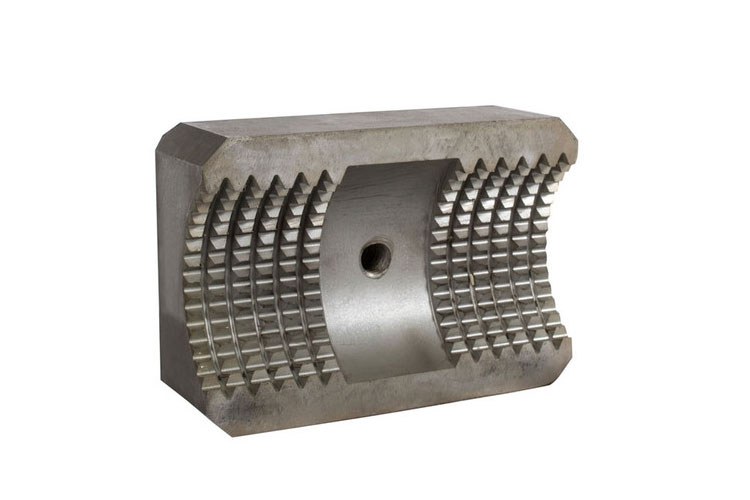
Choosing the Right Jaws: A Matter of Grip and Protection
Not all jaws are the same. Selecting the correct type is crucial:
- Standard Serrated Jaws: For general use on steel drill pipe. Provide a strong bite.
- Non-Marring or Soft Jaws: Often made from materials like copper, aluminum, or urethane. Absolutely essential when handling product pipe (especially polyethylene/HDPE or coated steel). They grip firmly without cutting into, deforming, or damaging the pipe, which could compromise its integrity.
- Profile-Specific Jaws: Designed to match the exact outer diameter and contour of specific pipes or tools, offering maximum contact and grip.
Best Practices for Using Vise Jaws
- Inspect Regularly: Check for worn, broken, or excessively dull teeth. Damaged jaws can slip or crush pipe.
- Keep Clean: Remove dirt, mud, and debris that can reduce gripping power.
- Use the Right Jaw for the Job: Never use serrated steel jaws on product pipe.
- Ensure Proper Alignment: The pipe should be seated correctly in the vise before clamping to avoid point loads and bending.
Conclusion
In the powerful, dynamic environment of an HDD jobsite, vise jaws perform a deceptively simple yet indispensable function: they are the steadfast anchor point for the entire operation. From building the drill string to pulling in the final product line, their reliable grip ensures safety, efficiency, and precision. By understanding their use cases and maintaining them properly, HDD crews can ensure these rugged components continue to be a foundation of project success. Never underestimate the power of a good grip!
SHARE:
More Posts for You
- Treating Your HDD Drill Pipe Like a Friend (Not a Tool)
- When I Realized ZHE HDD Drill Pipes Just Click with Ditch Witch
- Get the Most Out of Your Vermeer D100x120: Why ZHE HDD Drill Pipes Are the Best
- How to Pick the Best HDD Drill Pipe for Your Ditch Witch JT60
- It’s Not Just the Vermeer Rig: Your Drill Rod Choice Changes Everything
- Keeping Your Vermeer D36x50 Happy: The Unspoken Truth About Drill Pipes
- Getting the Most Out of HDD Drill Rods for My Ditch Witch JT10
- How to Choose a Horizontal Directional Drilling Contractor