Why HDD Drill Rods Break: Oversteering, Bend Radius & What Are You Doing Wrong
You know that sick feeling. The rig is singing, mud’s running, the bore’s running sweet, and then clunk. Torque spikes . Pressure rises. And your heart sinks because you know what that sound means.
Another rod just died.
I’ve been in this game long enough, five years selling drill rods, but more importantly ten years watching guys like you pull their hair out over broken steel. And I’m not here to sell you a magic wand that will never break. (Spoiler: it doesn’t exist.) I’m here to tell you the things I wish somebody had told me when I was the new guy on the job site with a busted pin end and wondering if I just cost my crew half a day of fishing.
9 times out of 10? Because? The rod is not to blame. That’s what you did two hours ago. Or what the driller missed on the steering screen. Or that tight little turn you swore was “no big deal.”
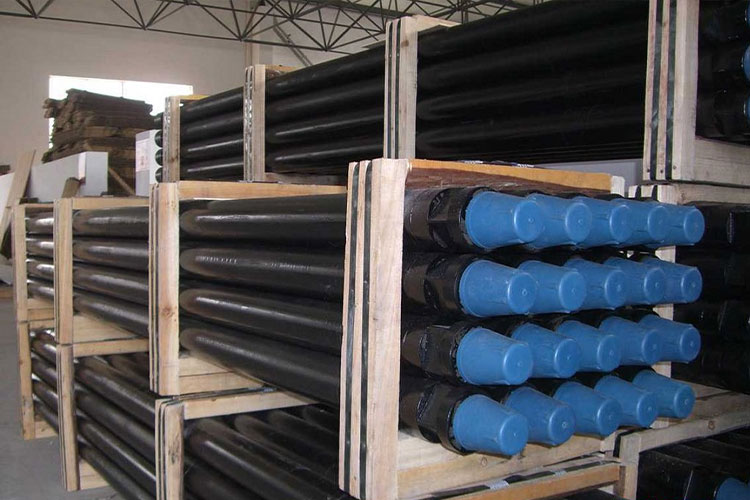
Let’s go through the real reasons HDD rods break, and I promise, I’ll keep the textbook junk out of it.
“Just a little more steer…” – My own dumb mistake
I was running a 40,000-lb rig on a water main job early. Sandy clay , easy going . We were about 150ft in and the exit point was moving left. Not too crazy, maybe 2 degrees off. But the foreman was watching me like a hawk, so I started turning the steering tool. Gone little nudge. Still not on. Another shove. Then another one.
By the time I got back on line I had bent that rod 20 degrees in about 12 feet of travel. Didn’t think twice. Twenty minutes later, bang. Right at the box end, some eight feet behind the bit, the rod snapped.
My shop supervisor didn’t yell. He just picked up the two pieces, lined them up on the ground, and said, “See that angle? “There’s your signature.”
That was my “oh crap” moment. I oversteered like a rookie, and the rod paid the price.
Here’s the thing they don’t tell you in the training videos. Every time you make a hard turn, you’re not just bending the rod in that one spot. You are work hardening the steel. You are creating microfractures that will not show up on any inspection. They sit. Sitting there. Waiting for the next job. Or the next hour. When the torque cycles hit just right. And pop.
So when guys say “the rod was junk from the factory” I bite my tongue. “Half the time I’ve seen them steer like they’re parallel parking a semi-truck.”
Bend radius – the number you don’t have
I see. Spec sheets are boring. And nobody remembers the minimum bend radius for their 3-1/2″ rods. But let me make it real.
If you have a 100-foot bend radius on your rod, you’re in trouble if you’re pulling back through a curve tighter than that, even for 20 feet. Maybe not. “Not if. You are literally going beyond the elastic limit of the steel. So it doesn’t get back. It has a permanent set. And then once it gets that set, every other rotation is bending it back and forth. It’s like a paperclip you keep folding.
Do you know how many folds it takes to break a paper clip? Around three.
I had a customer once, good driller, 20 years in, swore our rods were “soft.” He sent back 3 broken ones in a month. I flew out to his site and watched him hit a 200-foot shot under a creek. He was running a 6 inch tool but his entry angle was too shallow and had to crank the hell out of it to get down to grade. I pulled his steering log off the computer and overlayed it to his planned profile. That rod was bent into a diameter of 60 feet on a 90-rated rod
I didn’t lecture him. I just rolled up the screen and said, ‘Bro, you’re driving a school bus through a drive-thru.
He chuckled. Then for the next job he changed his angle. You know what? No more intermissions.
What you are doing wrong (I have done all of these)
Let’s be specific, because general advice is useless.
- Too much, too fast turning.
You don’t need to fix every half foot. Let the rod go. If you are off a degree or two, ease it back 10 or 15 feet. Your rod will love you. I know the client’s looking at the grade, but I promise you, fishing a broken rod costs a lot more than a slightly wavy bore. - Ignoring rotation speed vs push speed.
And when you’re pushing hard, turning slow, all that steering force is on one side of the rod. That isn’t steering, that’s torquing the pipe into a pretzel. Match your push to your RPM. If you got to fight, back off and ream a pass. - With worn-out tools.
A dull bit or a worn reamer forces you to bear down. The harder you push the harder the steering force will be. More steering force leads to more bending. I have seen guys blame the rod when the reamer was so worn it looked like a river rock. Change your bit and suddenly the rod is “not so bad after all.” - Not looking at your mud.
This is a sneaky one. Thin mud means less lubrication, which means more friction, which means you have to push and steer harder to go anywhere. Same result: rods overstressed. I keep a Marsh funnel in my truck for a reason – not because I’m a nerd, but because I’ve seen a simple viscosity check save an entire string.
The lie we tell ourselves about the “bend radius”
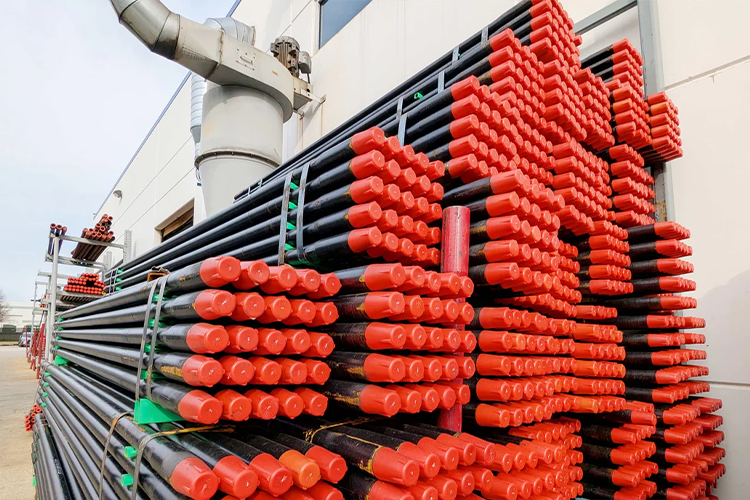
This is where I get real with you. “Ah, it’s only tight for a short section,” is a phrase I’ve heard every driller I know say at some point. The rod can take it.”
No. It can’t.
The crack begins in that short section. It’s like stomping on a soda can, one dent and it’s never quite the same. Straightening does not “cure” the steel. It recalls. And when you’re pulling back with 30k pounds of tension that remembered bend is a stress riser. And stress risers are where the breaks occur.
I began carrying a bend radius little cheat sheet in my hardhat. Not for show. For me. I still catch myself wanting to cheat a curve even after five years. That cheat sheet has saved me more rods than any premium steel has.
One conversation that turned my whole approach around
I was at a trade show and I was complaining to an old timer about how many rods we were replacing under warranty. He heard, sipped his coffee, and said:
“Son, a drill rod is like a fishin’ line. You can pull on a fish all day long. But the minute you kink that line, it’s finished. “You don’t blame the line, you blame the guy who kinked it.
It stuck with me. Because he was right. We spend so much time arguing about steel grades, heat treat, thread designs. And yes, those things matter. But 80% of breaks come from how we use the rod, not how it is made.
So now if a customer calls me hot about a broken rod, my first question is not “what’s the serial number? “Can I see your steering log?” 9 times out of 10 the log tells the story before the rod does.
Real practical stuff that actually works (not the fluff)
Mark your sticks. Really. Paint a stripe on each and check after each retraction. If you see the stripe getting wavy or stretched, you have a rod that has taken a permanent set. Get it out of the rotation before it breaks.
Drill out your bore path before drilling. I don’t care that the design calls for an 80 foot radius. Walk it, check out the terrain and ask yourself, “Can I realistically steer this without cranking?” If not, change the entry or drill a pilot hole.
When in doubt, ream one more pass. I know, I know – time is money. But fishing time is money. One more reaming pass takes a lot of the load off the steering on the last pullback. I’ve seen it cut rod breaks in half on the same job.
‘Now, I’m in the rod business. I wish I could tell you that our rods are unbreakable. They aren’t. Good steel gives you a little more forgiveness. Maybe 10% more bends before fatigue. Maybe better thread life. But if you over-steer a premium rod into a 50 foot radius it will snap just like the cheap one. But it’ll snap. Maybe another foot ahead.
The real value of a good rod is not that you may abuse it. It’s that it tells you – from the torque readings, from the vibration – before it goes. But you must listen. And you need to stop doing what I did for my first 2 years, which was thinking I was “getting the job done.”
My last story – the one that keeps me grounded
Last summer I was helping a buddy out on a weekend fibre gig. easy 300′ shot small rig 2″ rods Five years in, I was feeling cocky, right? I know all things.
When we were at 100 feet we struck a boulder which was buried. I didn’t pull back and reroute, I tried to go around it. S-curve, nice and snug. I knew it. But I didn’t want to lose the hole.
We withdrew a rod that looked like a banana 20 minutes later. My friend just looked at me. Ain’t said a word. I gave him my wallet and said “get the replacement.”
That night I wrote on my whiteboard in the garage: “Drive like your rod owes you money, not like you owe the client a perfect line.”
Because perfect lines don’t matter if you are fishing for three hours.
So the next time you are in the cab, and that steering tool shows you are off-line, take a breath. Ease back. Let the rod do its thing. And if you ever doubt, call me—I’ll talk you off the edge. Not because I want to sell you a new rod (okay, maybe a little bit), but because I have been the guy holding the broken piece and I know exactly how stupid that feels.
Drill safe, steer gentle and for the love of all that is holy, check your bend radius.
SHARE:
More Posts for You
- Machine Learning for Prediction of HDD Drill Rod Failure – What is Possible?
- How bad can a dogleg be ? HDD drill rod fatigue : what are the safe limits ?
- HDD Drill Rod Steel Price Impact on Costs: 2026 Market Outlook
- OEM vs Aftermarket HDD Drill Rods: Warranty, Liability & Performance
- How a Bent Sub or Worn Saver Sub Impacts Your Whole Drill Rod Inventory
- How Much is Your Old HDD Drill Rod Worth for Scrap? (Current Pricing Knowledge)
- 7 Deadly Sins of Handling HDD Drill Rods: Dropping, Dragging, Over-Speeding
- Urban Utility Drilling: Why Shorter, Stiffer HDD Drill Rods Are Often Better