New vs. Refurbished HDD Drill Rods: Which Saves You More in the Long Run?
The thing about drill rods is they are mind-numbingly boring until one breaks 80 feet down and then they become the most interesting thing in your life.
I’ve been selling these for five years and I still remember my first “oh crap” moment. I got a call from a customer who was all proud of himself because he’d just bought a whole set of refurbished rods for about 60% of what new ones would cost. He was practically gloated. Two weeks later he called back, but the smugness was gone.
His voice was tight with that “I’m really trying not to swear” sound. One of the repaired rods had cracked at the base of the thread during a 500-foot pull-back. By the time they noticed the torque was acting strange it was too late, the rod snapped off, they spent the whole day fishing it out and the job went from “easy money” to “we’re losing money on this one”.
That day I learned a lesson that no spec sheet ever taught me. The least expensive rod on the jobsite is never the one you spent the least money on.
So let’s have a real, no-BS talk about new vs refurbished HDD drill rods. No corporate bullshit. Just the stuff I wish someone told me when I was still green.
The Price Tag Lie—and How We All Fall For It
Let’s face it, when you see a refurbished rod at 40% off the price of a brand new one, your inner accountant starts doing back flips. I see. I do the same thing when I buy tools for my garage. You think, “It’s the same steel, same threads, just somebody cleaned it up and put new grease in the box. “What’s the big deal?”
This is the big thing. Fatigue is invisible.
Steel doesn’t tyre out like you do after a 14-hour shift. It gets tired in a much more sneaky way. Each time a rod is inserted into the ground it bends a bit, twists a bit, and then straightens up again. You can’t see that small a movement without a magnifier. But the metal? It’s recall. After hundreds of turns and thousands of pounds of pullback, the steel grain starts to change. It is harder, more fragile, less forgiving.
A refurbisher can clean the rod, chase the threads, make it look purdy and even magna flux it to find surface cracks. But here’s the catch nobody tells you. Magnaflux only finds cracks that are open to the surface. It won’t detect the internal stress that’s building up like a ticking time bomb inside the tube wall. And that bomb? “It’s when you’re in the middle of a bore that it goes off, not when the rod’s sitting on the rack.”
The story of “that one job” that changed my mind:
I was pretty neutral on the whole new vs re-furbished debate. I mean, if a guy wants to save some money up front, that’s his choice, I thought. But then I had a customer, call him Mike, who ran three rigs in rocky ground. From the start Mike was a reclaimed guy. He boasted that he hadn’t bought a new rod in two years.
Then he got a job under a 4-lane highway. 300′ of 6″ HDPE, under the water table, with a pretty tight radius. On his second set of reconditioned rods, about 180 feet down, he felt the torque spike. He backed off, tried to spin through it and snap, and the rod broke right at the pin connection about 40 feet from the exit pit.
Here’s the painful part. It wasn’t just the rod. It was 12 hours of down time to wait for a fishing tool. The rental of the locator he couldn’t return in time. It was the crew standing around being paid to watch him fish. It was the penalty clause in his contract for missing the deadline. And most of all? The bore path was disturbed and the utility locator had to come back out and re-mark everything.
When Mike finally got the rod out we sent it to a metallurgist for kicks. The report came back. Stress corrosion cracking that had been growing for God only knew how many cycles. That rod had probably been rebuilt three or four times before Mike ever bought it. Every time they cleaned it, checked the threads and sent it back out to die somewhere else.
Mike doesn’t buy refurbished anymore. He’s not rich, he’s simply weary of being the guy who saves a buck today and spends three tomorrow.
What Are You Really Paying For With New Rods
Look, I sell new poles. I’m not going to pretend that I’m impartial here. But I’m not going to tell you that new rods are the answer to everything either, because it’s just not true. There are definitely places where a used rod makes sense.
But when you buy a new rod from a good factory, not necessarily mine, any good one, this is what you are really paying for:
You’re buying reliability. Every new rod in that batch was the same heat treat cycle, same batch of steel, same machining setup. That means when you put 500 foot-pounds of torque on it, you know just exactly what it’s going to do. Nothing to be surprised about. In this business, you can’t afford to be surprised.
You are buying a known fatigue life. A good manufacturer can provide you with a ballpark estimate of the hours or feet of bore you can expect from a rod in normal conditions. You can schedule your replacement. Used rod means you are betting. Maybe it has been used only twice. Perhaps it was used twenty times. No one knows. There is no mileage odometer on the paperwork.
And the big one, you’re paying for the threads to be freshly cut, not re-cut. When a refurbisher hunts threads, they’re shaving a thin layer of metal to clean up the wear. Do that a few times and the geometry of the thread changes. The pin becomes skinnier. The box broadens. The connection is sloppier and sloppier. And a slovenly connection means more stress on the thread roots, which means more cracks, which means more snapped rods.
The Truth About Rebuilt Engines
Okay, I’m not trying to poo poo refurbished rods like they are all junk. That would be a lie and you’d smell it a mile away.
Refurbished rods do have their place. If you’re doing short bores in soft dirt, if you’re not pushing crazy torque, if you’re just trenching some small-diameter conduit under a parking lot — yeah, refurbished might be totally fine. You can get 80% of the price for 60% of the life. The numbers work.
But here’s the thing. You have to know your limits. And most guys don’t.
I’ve seen a guy use reconditioned rods in a 150 foot bore in clay, no problem. Then he drills a 400 foot hole with a 20 degree deviation in some shale and he grabs the same exact rods because “they worked last time”. And that’s where the math falls apart. That shale adds twice the vibration, three times the side load, and suddenly those marginal refurbished rods are way out of their comfort zone.
If you’re going to run refurbished, here’s my unsolicited advice: treat them like rental gear. Check the hell out of them before every single use. Look around the threads for any discoloration, which is usually an indication of overheating and that the steel has lost its temper. Run a straight edge along the tube to check for bends. And for the love of all that is holy, number each rod and keep a log. If rod #7 has been used on eight jobs, retire it before it retires itself on your next pullback.
The Costs Nobody Adds Up
This is the part that makes me crazy. Guys will compare the cost of new vs refurbished down to the penny, but they won’t factor in the stuff that actually costs money.
Down time. What’s it worth if a rod breaks and you lose half a day? If your rig costs you $1200 a day to run including labour, that’s $600 for a half day. Two rod breaks in a year, and you just ate up the entire savings from going refurbished.
Cost of fishing. “Yeah, but we can just fish it out.” I can’t tell you how many times I have heard that. Of course you can. If you have the right equipment, which you probably have to rent. And if you can find that breaking point And if you don’t make it worse by trying to dig it out. I have seen a simple fishing job become a three-day ordeal because a broken rod got itself into a corner trying to be grabbed by the crew. That’s not savings, that’s a disaster.
Wear on your gear. A rod with a little sloppy connection will pass vibration back into your gearbox and your carriage. Eventually that vibration wears out bearings, seals and hydraulic parts. Tomorrow you won’t see the damage. But you will see it when your gearbox needs a rebuild, 500 hours too early. And that rebuild costs a lot more than a set of rods.
Your name. This one is a little harder to put a number on. But if you’re the guy with equipment problems all the time, people talk. Contractors recall. When there’s a big job and they need somebody reliable, they don’t call the guy who saved a few bucks on rods, they call the guy who gets it done on time.
The “Mix and Match” Approach That Really Works
Alright, so here’s the compromise that a lot of my smarter customers have figured out.
They purchase new rods for the front half of their string, the rods that are actually steering, taking side loads and seeing the most stress. Those rods get the most abuse, so they have to be the strongest and most predictable.
Then they use secondhand rods for the back half – the straight bits where there is less bending and the drill is already pointing where it needs to go. The rods still work but they are not exposed to the same sort of abusive forces.
And here’s the pro move, they rotate the string. After a few jobs they relocate the front rods to the back and buy a new set for the front. That way the refurbished rods never get put into the high stress spots and the new rods get the longest possible life out of them because they are not always getting beat up.
Is it more expensive than an all refurbished model? A little bit yeah. But it’s a lot cheaper than going all new, and it gives you a safety margin all refurbished just can’t offer.
My Bottom Line (After Way Too Many Discussions About This)
This is what I tell my customers when they ask me pointblank: “Should I buy new or refurbished?”
Are you doing small jobs, soft ground, and you’re on a tight budget? It might be ok refurbished. Just look at them religiously and don’t push them beyond what they can handle.
Are you working on big jobs, hard ground or do you have a reputation to protect? Brand new. The initial cost bites for five minutes. Breaking a rod at 200 feet is a whole lot more painful than the price of the rod.
Somewhere in between? Try the mix and match thing. Use your best judgement. And for god’s sake, keep track of which rods have had the most action. A simple spreadsheet or even just paint marks on the rods will save you more grief than you can imagine.
We have a customer who puts coloured electrical tape on his rods. Each time a rod goes through three jobs, he shifts the tape to a different location. When it hits five he puts it in the “backup only” pile. It’s not fancy, but it works, and he hasn’t had a rod failure in two years. Meanwhile his buddy that bought the same batch of refurbished rods and never tracked anything… guess who is calling me for a rush order right now because he is down three rods in the middle of a job?
Yeah.” That is what we do.”
One Last Thing—and I Say That Sincerely
“I’m not saying new rods are perfect. They can also go awry. I’ve seen new rods break because the operator ran them into a rock at full speed and didn’t back off. Steel is not a magic. There is a limit.
But the difference here is if a new rod fails it’s normally a one-off. A manufacturing defect, a freak hit, something you can say, ‘that was a fluke’. Usually when a refurbished rod breaks it is because the metal was already fatigued and no one knew it.
And that’s the part that keeps me up at night to be honest. Because I talk to guys like you every day. I know you’re not made out of money. I know the margins are thin and the boss is always on your case about why you can’t get more life out of the equipment. I’ve been in those meetings. I have checked the spreadsheets.
So I’m not going to sit here and tell you you have to buy from me or you have to buy new. That won’t do any good, and you wouldn’t believe me, anyway.
I’ll tell you this: whatever you buy, know what you’re buying. Ask the rebuilder how many times that rod has been re-machined. Ask them to show you what their inspection process looks like, not the marketing brochure, the real thing. If they can’t tell you, that’s your answer right there.
And if you’ve got a question, or you just want to run a scenario by someone who’s seen a thousand different jobs in a thousand different kinds of ground — give me a call. I’ll tell you what I think even if it means you don’t buy from me right now.
That’s what being a good salesman is all about, in my book.
Now go inspect your rods. And maybe get a spare set. In case.
SHARE:
More Posts for You
- Machine Learning for Prediction of HDD Drill Rod Failure – What is Possible?
- How bad can a dogleg be ? HDD drill rod fatigue : what are the safe limits ?
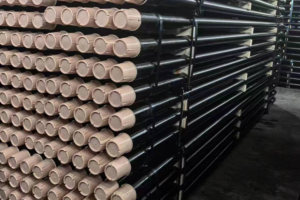
- HDD Drill Rod Steel Price Impact on Costs: 2026 Market Outlook
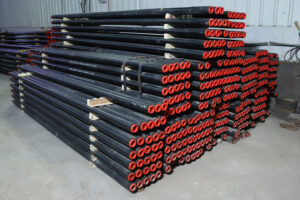
- OEM vs Aftermarket HDD Drill Rods: Warranty, Liability & Performance

- How a Bent Sub or Worn Saver Sub Impacts Your Whole Drill Rod Inventory
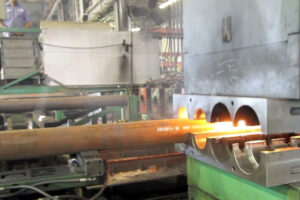
- How Much is Your Old HDD Drill Rod Worth for Scrap? (Current Pricing Knowledge)
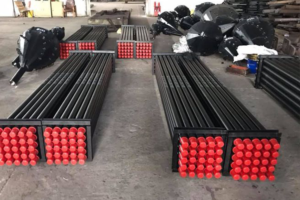
- 7 Deadly Sins of Handling HDD Drill Rods: Dropping, Dragging, Over-Speeding
- Urban Utility Drilling: Why Shorter, Stiffer HDD Drill Rods Are Often Better