Urban Utility Drilling: Why Shorter, Stiffer HDD Drill Rods Are Often Better
Lets talk about something that has been bugging me (and probably you) for years, rod selection in tight urban jobs.
I’ve been selling and geeking out on HDD tooling for about 5 years now and I still remember my first “oh crap” moment downtown. We were doing a 200-ft bore under a busy intersection – gas, fiber, water all in a 6-ft corridor. Nice flexible standard 15-ft poles, great for long rural shots. This was not rural though.
The pilot bit started to walk like a drunk tourist half way through. I pushed the power up and the rod buckled and we kissed a water main—just a scratch, but it turned the city inspector white as a sheet. My foreman looked at me and said “Bring the stubby stiff ones next time.”
And that’s when it clicked. Shorter and stiffer is not a compromise in the city, it’s a superpower.
The Long & Limp Trap
We were all told longer rods would have fewer connections and hence drill faster. And open fields? Well… Go on, knock yourself out. But apply that same logic in a 40-ft wide alley with manholes every 15 feet, and you’re asking for trouble.
Long rods flex. That’s physics. Push hard off the rig, and that 15-footer becomes a spring. It’s good in soft soil, it just bends a little. But in the city floor? You have cobble, old asphalt layers, abandoned foundations. The bit hits a hard spot and the rod flexes and suddenly your entry angle is lying to you. You’re not driving, you’re guessing.
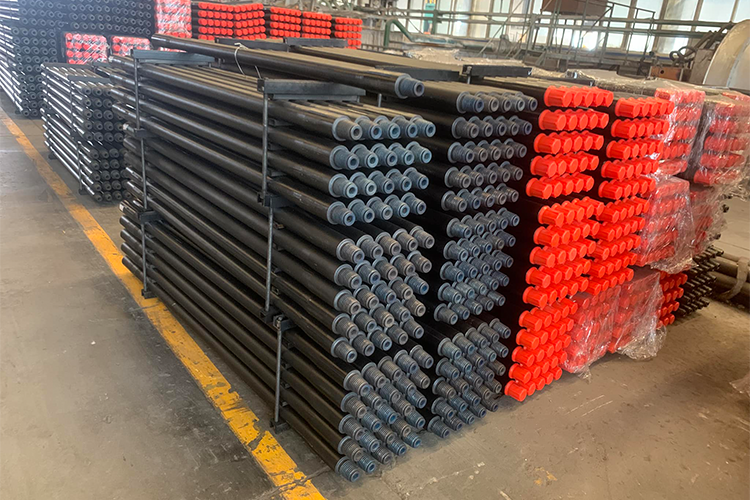
Last month I had a customer call me, furious. “Your rods suck! I can’t hold grade!” I asked him how long he was running for. “15s, as always. I sent him a set of our 10-ft thicker-wall rods to try. Two days later he calls back, half laughing: I hate you. “Why didn’t you tell me sooner?” His grade varied less than 1% over 120 feet. He had finished a day early. That’s not me being clever, that’s only stiffness doing its job.
Why the Stiffness Wins Over Length in the Concrete Jungle
Let’s get nerdy for 30 seconds (it’ll be painless). Stiffness = diameter^4 / length^2 Twice the diameter? Stiffness increases by 16x. Cut the length from 15 feet to 10 feet”? You almost double the stiffness right there. Combine both shorter + thicker wall and you get a rod that transmits torque like a solid steel arrow instead of a wet noodle.
So what does that mean for you, on the job?
Precision SteeringThe bit moves immediately with every rack turn. No lag, no “snapback.” You can feel the earth with your fingertips.
Less downtime – Less stuck pipe, as rod doesn’t buckle under high push. I’ve seen guys get 10-ft stubs out of a 6-inch bore with no problem at all and the 15-footer right next to it had to be speared.
Tighter setup – Set up in a 20ft box truck bay. No 50 ft clear run behind rig. That footprint in city work saves you from blocking fire hydrants and getting yelled at by traffic cops (been there, got ticket).
My “Aha” Moment That Changed My Selling
I would second the catalog line: “Longer for reach, shorter for tough angles.” Generic, isn’t it? I did a week with a crew in Seattle all they did was replace old gas lines under sidewalks. They only ran 10-ft cables. I asked why? “Kid,” said the chief driller, a grizzled guy named Rick, “every foot of rod is one more foot of lies. Ground’s level enough for you in the city.” I want my rod to tell the truth.
That stayed with me. When a customer calls for 15s now because “that’s what we’ve always used,” I don’t argue. “How many times did you go over target last month?” I ask. Silence. “How many adjustments on each rod?” More quiet. Then I give a split pallet, 10s half, 12s half, just for testing. Nine times out of ten they reorder the shorter ones.
But What About Reach? (The Elephant in the Room)
I hear you: “Shorter means more joints, more make-up time, more chance of thread wear.” Okay. But let’s do the real math. 200 ft bore 15 ft rods = 14 connections. 10 ft rods = 20 connections. That’s 6 more stab bites, maybe 2-3 minutes total with a good breakout system. Now compare that to the hours you lose when a flexed rod gets into a sewer line and you have to vacuum truck it out. I’ll take the extra stabs every Monday.”
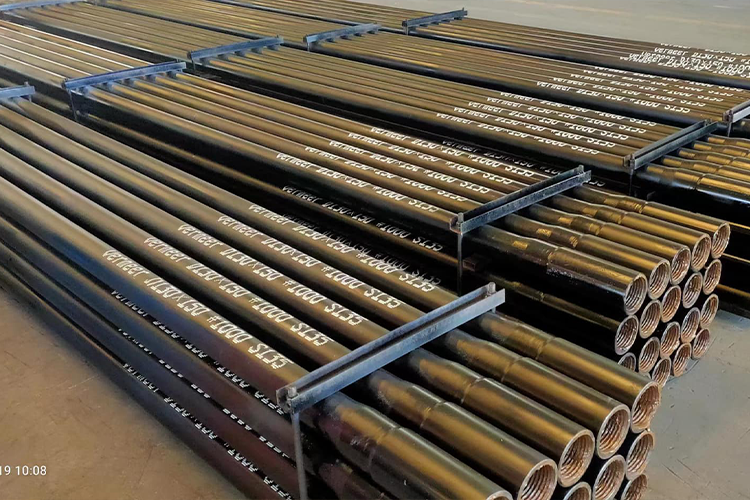
And threads? The pin and box dimensions on our shorter rods are beefier because we’re not chasing weight savings. Less wear per connection, really–the load’s distributed over a thicker shoulder. I have customers getting 40,000 ft. bore per set of 10 footers vs 25k on the 15’s. Numbers don’t lie.
My Personal General Rule
Go short and stiff if your bore is less than 300’ and you have more than three existing utilities within 10’ of your line of sight. Give me a 10 ft rod I can guide like a scalpel over a 15 ft rod that guides like a pool noodle any day. For long rural water mains? Keep your 15s, even 20s, I’ll sell them to you with a smile. But for drilling in urban utilities? That’s the playground for the short rod.
One Last Story to Make the Point
Last year I went out to a job site in Chicago. They were drilling a 4-inch conduit beneath an active rail crossing. “The engineer spec’d 12-ft rods, because that’s the shortest we allow. The crew boss pulled me aside, and whispered, “We swapped in 10-fters from our other rig, don’t tell the engineer.” They finished the project four hours early, with less than a two-inch deviation. The engineer never found out. The boss winked. ‘Sometimes you gotta break the rules to stay on the ground.
I’m not saying cheat specs, I’m saying challenge assumptions. Next time you’re quoting a city job ask yourself: Is it habit that leads you to choose length, or intelligence that leads you to choose stiffness?
Get in touch if you want to give a set of our stubby stiffies a go. I’ll even chuck in a coffee mug that says “Short Rod, Big Attitude”. Because life is far too short for boring drill rods.
Drill straight. Stay safe. Call me when the earth fights back.
SHARE:
More Posts for You
- Machine Learning for Prediction of HDD Drill Rod Failure – What is Possible?
- How bad can a dogleg be ? HDD drill rod fatigue : what are the safe limits ?
- HDD Drill Rod Steel Price Impact on Costs: 2026 Market Outlook
- OEM vs Aftermarket HDD Drill Rods: Warranty, Liability & Performance

- How a Bent Sub or Worn Saver Sub Impacts Your Whole Drill Rod Inventory
- How Much is Your Old HDD Drill Rod Worth for Scrap? (Current Pricing Knowledge)
- 7 Deadly Sins of Handling HDD Drill Rods: Dropping, Dragging, Over-Speeding
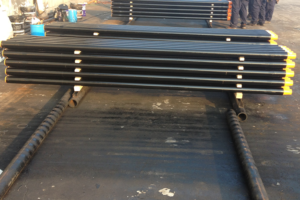
- Urban Utility Drilling: Why Shorter, Stiffer HDD Drill Rods Are Often Better