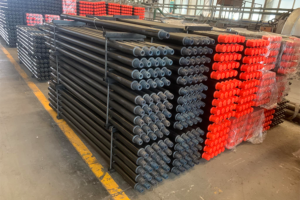
How Does an HDD Drill Rod Actually Rotate Underground?
So you’re on a jobsite, looking at a line of steel drill rods and someone asks: “Okay smart guy, how does that thing turn left with a boulder in the way?”
I’ll be honest, for the first six months of selling these rods, I gave answers that made me sound like a robot. Something about ‘downhole motor orientation’ and ‘bend radius’. People’s eyes glazed. One guy just walked off mid-sentence. He did.
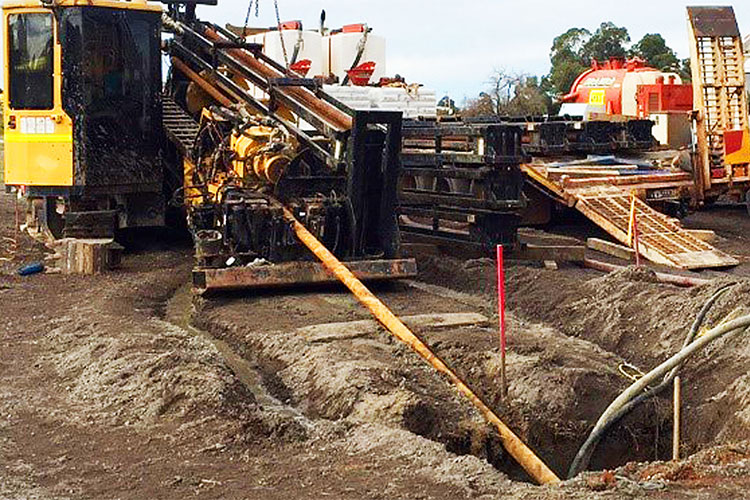
Let me tell you what I wish someone told me back then.
The Day I Discovered I Was An Idiot
About four years ago I was in a contractor’s yard. Rick, the old man. Hands greasy, cigarette behind his ear. On a bucket he had a bent housing and a worn-out drill bit.
I asked him the same stupid question, “Rick, how does this thing turn?”
He stared at me. Spit on floor. Then he seized the bit assembly, held it up and said: “Son, it doesn’t rotate. You stop turning it. Then you just shove.
Shoving the bit forward without turning it, he did. The angled face of the bit moved sideways. “Look? That is your curve.
I swear my brain went click.
The Simple Truth: Push vs. Rotate
What you have to remember, and I mean you really have to remember it, is:
Your drill string rotates , and the bit rotates . That spinning motion averages out any angle on the bit or housing. Outcome? Directly ahead. Like a top that can’t be knocked over.
When you stop rotation – just the drill string, not the mud pump – and you keep pushing forward, that angled surface or bent housing has a preferred direction now. It bites into the side wall. Your move.
That’s all it is. No magick. No invisible wheel. A very dumb, very consistent trick.
“But wait – the whole string doesn’t bend, does it?”
Exactly. And this is where I see the rookies panic.
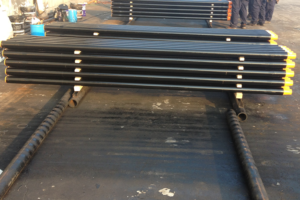
They believe the entire 200 foot string of drill rod has to snake. No. The rods themselves are basically still straight. Only the bottom few feet of the steering wheel , the bit and housing , steer . Whatever is behind just follows the hole you just made.
Think about a semi truck pulling a trailer. The truck makes a turn. The trailer is on the tracks. The trailer does not bow in the middle. Same thing.
One time a customer called me all stressed: “My rods don’t bend enough! I asked him if he wanted them to break. Silence long. Then: “Oh. Yeah. Good point.
Why Your Drill Rods Don’t Need To Be “Super Flexible”
This cracks me up. Still. Some sales guys try to sell “flexible rods” like that’s a good thing for steering. Here’s a secret: flexible rods don’t steer better. “They just break sooner and wear out faster.
What you really want is strength to deal with the push when you are not spinning. That’s when the forces get nasty – all that thrust going through a non-rotating string. Weak sticks? They’ll get bent all the time. Or click. Then you are fishing. And no one likes fishing.
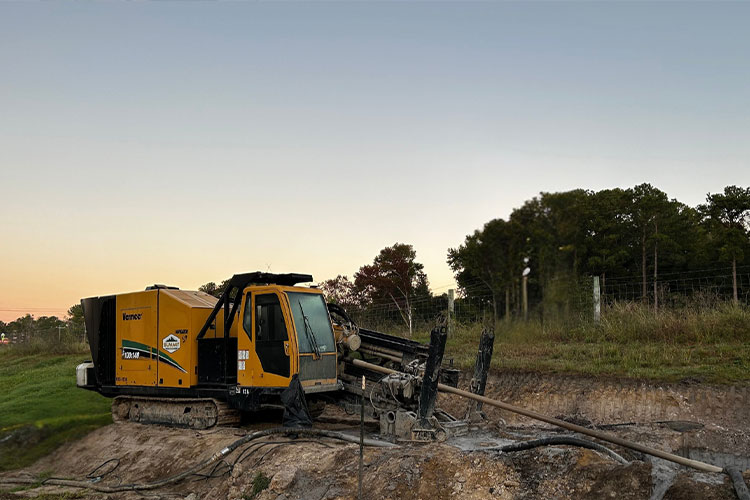
I’ve pulled broken rods out of holes where the guy swore he bought “super flex” rods. You know what I seen? Steel got tired. Burnt threads. Zero steering enhancement.
So yeah. Keep the talk about flexibility for yoga. “Give me consistent hardness and good heat treatment any time.”
A Real Life “Oh Crap” Moment
Last year I worked a job helping a new crew. Water line under driveway crossing. The driller was turning, and making good headway. Then he had to turn left to avoid a sprinkler line.
He ceased his rotation. Pushed. Nothing occurred. Pushed harder, Still straight.
I walked over and asked, “You sure you got an angled housing on there?” He climbed down. Looked. No angle. Assembling wrong bits. Had drilled straight all the way with a straight casing.
We both laughed. Then he swore. Then we backed out, changed the housing and ten minutes later he was turning like a pro.
The thing is, even experienced dudes botch this. It’s a simple concept, but it has to be done right.
How You Really “Feel” the Turn As a Driller
Here’s something nobody told me until I sat in a drill cab myself.
When you push without turning you can feel the resistance change. The bit bites one side of the bore. The pressure gauge jumps a bit. You’ll hear the engine grumbling. Here is your cue – you are turning.
But here’s the trick: you don’t just keep pushing. You give it a nudge. Turn a little to straighten the hole. press once more “Like playing a very dirty, expensive video game with rocks.
“tap, tap, rotate,” is what one of my favourite drillers calls it. Tap forward to nudge direction. Twist to lock it in place. Repeat 500 times. And that’s how you get a nice smooth curve.
So What Do You Look For In A Drill Rod?
You know I sell these things – but I’m not going to hype you – here’s my honest opinion.
Good steering doesn’t need fancy gimmicks. You will need:
Straightness – It gets strange when your rod’s a little bent in the first place. Like driving a car with a bent wheel.
Strong threads – Because you’re constantly stopping and starting the rotation. That’s rough on relationships.
Uniform wall thickness – No thin areas. If you push hard without rotating, they become failure points.
We build rods that fit those boxes.” But even if you buy from someone else – just remember those three things. You’ll save yourself a lot of grief.
The Bottom Line (Because You Asked For One But Not Being Preachy)
Next time you’re on a bore and someone asks you how the drill bit turns underground, just smile and say:
“It doesn’t rotate. We stop it from spinning. We knock it off course. The bit is a little angled. “That’s the whole secret.”
If they seem confused, grab a pen. Hold it straight push it across the table straight line. Tilt the tip of the pen just a little to one side, push without rotating it. See it bent? Yea. That’s HDD steering in your palm.
Now go make some curves. And for the love of mud, check your housing angle before you get started.
Thanks,
A guy who has fished too many broken rods out of holes where someone “knew better.”
SHARE:
More Posts for You
- Machine Learning for Prediction of HDD Drill Rod Failure – What is Possible?
- How bad can a dogleg be ? HDD drill rod fatigue : what are the safe limits ?
- HDD Drill Rod Steel Price Impact on Costs: 2026 Market Outlook
- OEM vs Aftermarket HDD Drill Rods: Warranty, Liability & Performance

- How a Bent Sub or Worn Saver Sub Impacts Your Whole Drill Rod Inventory
- How Much is Your Old HDD Drill Rod Worth for Scrap? (Current Pricing Knowledge)
- 7 Deadly Sins of Handling HDD Drill Rods: Dropping, Dragging, Over-Speeding
- Urban Utility Drilling: Why Shorter, Stiffer HDD Drill Rods Are Often Better