When Is the Right Time to Buy New Drill Pipe?
What No One Tells You About Buying New Drill Pipe (Until It’s Too Late)
Look, I’ve been around this non-destructive drilling world long enough. Five years to the day. And of all the questions I get, more than any other, from grizzled superintendents who have forgotten more about mud motors than I will ever know, to fresh-faced project managers who still call casing “that metal tube thing,” it is this:
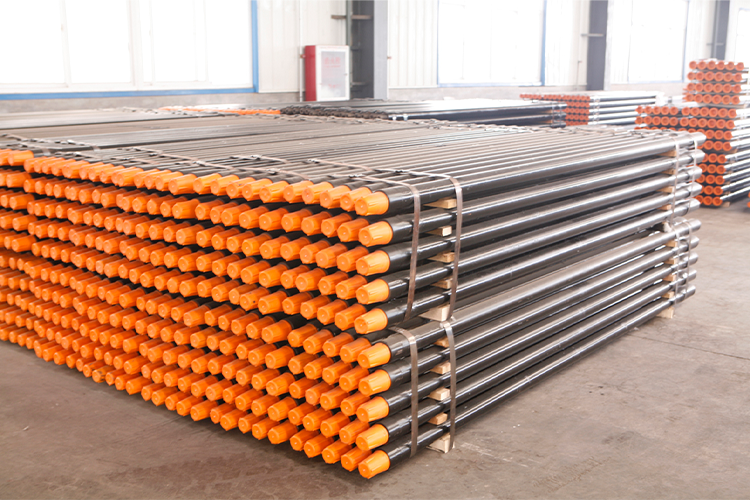
“When do I actually pull the trigger on new hdd drill pipe?
Not ‘should I’. Not ‘what’s the cost’. But when? And truthfully? Most dudes wait way too long. Or they buy too soon and kick themselves when the new shiny sticks sit in the yard for six months because the old warhorse still had a few good miles left.
So let me tell you a tale. Get a coffee. Or a beer I don’t do judgement.
That Unheard Sound,
About 2 years ago I was on a job site out of Tulsa, nice little river crossing, 600′ of 4″, nothing crazy. The crew ran their pipe as if they’d done it a thousand times. But I saw something. Every time they met there was this ting, not a solid clunk, not a clean ring, but this sad little metallic squeak that hurt my back teeth.
I went over to the operator, Dave–guy’s been drilling since I was in diapers– and I said, “Dave, when was the last time you mic’ed these threads?”
He looked at me like I’d asked for his grandmother’s secret chilli recipe. “They’re all right,” he said. “Only slightly dry.”
Spoiler: they were not. They lit up a joint at 400 feet three days later. The fishing job lasted 14 hours. That pipe was not only dry, it was tired. The threads were worn past the hardening depth, the box ends bell-mouthed just enough to fool the naked eye, and the ID had washed out in places you couldn’t see without a gauge.
That was Dave’s “aha” moment. But it meant a week of downtime for him, and a very unhappy customer.
So here is my first piece of real-world advice: if you are starting to make excuses for your pipe, it is already too late.
The “Just One More Gig” Lie We Tell Ourselves
I’m guilty of it as well. All of us are. You have a set that’s got 40,000 feet, maybe 50. The threads still look halfway decent. The tube walls are not paper thin. And that next bid is tight. Ramen-for-dinner tight. So you say, “She’s got one more in her.”
And sometimes she does. Sometimes you are lucky.
But here’s the thing nobody talks about: the cost of a failure isn’t just the pipe. The time of the rig. It’s the standing around crew. That’s the fishing gear. It’s the re-drilling, It is the expression on the client’s face when you tell them you are behind schedule.
I had a customer in Texas last year, great guy, runs a small crew, does mostly fibre optic. He called me and said, “I’ve got about 35,000 feet on my pipe, Thinking I’ll run it on this 800-footer. What do you reckon?”’
I asked him, ‘When was the last time you had a full inspection?’
Long pause. “Uh… never?”
I didn’t tell him to buy a new pipe. I told him to send me a few samples from the worst looking joints. We ran them through our gauge ID wear in three spots was .045″ over spec. “That pipe was not going to break tomorrow.” But it was going to start leaking torque, and then you’re chasing problems at every single connection.
He bought a partial set, enough to cycle out the worst 30 per cent. Rest of it for shorter, shallower work. Good move. That’s not me selling, that’s me helping a guy not blow his entire year’s profit on one bad decision.
The Calendar Lies
Some sales reps will say, “Oh, change your pipe every 18 months.” Or “Every 50,000 feet.” That’s bullshit.
I don’t give a damn what the calendar says. I don’t care what the hour metre says. I care about:
What are you drilling into? Pipe eats sandstone. Clay? Not really.
What kind of mud programme? Good mud with the right lubricity? Your threads will be grateful to you. Just running water? Basically you are sanding your joints down at every connection.
Who’s on the ice? A careful operator who makes connections by the rules? That pipe is going to outlast your truck. A roughneck that hits till the wrench screams? You buy new twice the speed.”
I had one customer who ran the same spec pipe as another guy, bless his heart. Same footage, same ground conditions. One set was good to 70,000 feet. The other one was toast at 32,000. What’s the difference? First guy used thread compound like it was going out of style and had a torque monitor on his rig. The second guy…didn’t.
So don’t ask me for a figure. Ask yourself, how does my pipe feel?
The “Oh Crap” Inspection That Saved My Bacon
Let me put it this way. A couple years ago, I had a set of 3 1/2″ that I knew were getting long in the tooth. I’d put maybe 55,000 feet on it.” But I was stingy. And crazy busy. And I kept on pushing it.
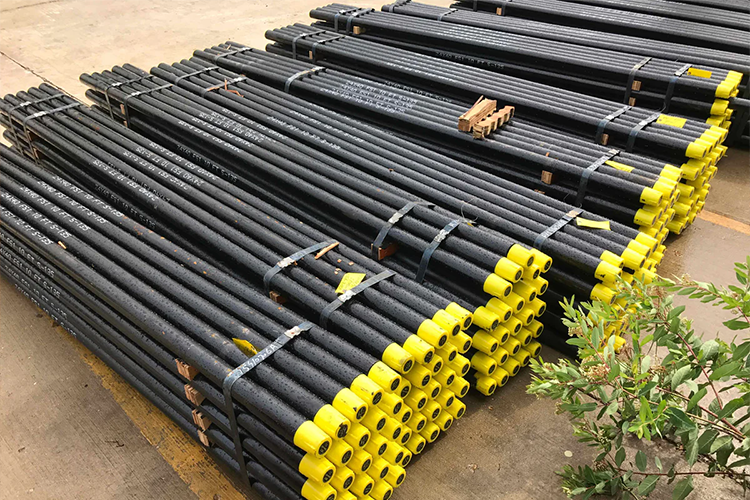
I thought I’d have a good look at things one Friday afternoon. Just for the hell of it. Then I took each joint apart, cleaned them, mic’d the threads, and ran a mandrel through the ID.
Three joints were found with stress cracks at the pin root. Invisible to the naked eye. But under the microscope? Crystal clear.
I was going to run that pipe on a 1,200-footer the following Monday. If I hadn’t checked I would have snapped one of those joints at 800 feet, in a residential neighbourhood, under a street. Can you picture the phone call?
Sorry, Mr. Homeowner, we made your front yard into a mud pit and we’re going to be here for three more days fishing out a broken pipe.”
Yeah sure. No, thank you.
That weekend I bought new pipe. Because I didn’t want to.” I had to. And I’ve never looked back.
The Real “Right Time” (Spoiler Alert: It’s Not When You’re Out of Pipe)
Here’s my honest opinion after five years of watching guys make this decision, some well, some painfully:
The time to buy new drill pipe is when you have 3 good jobs left on the old set.
Not nothing. Not “maybe one,” 3.
Why? That gives you a cushion. You can work the new pipe in slowly, mix it with the old, break it in easy, learn its quirks (for every pipe has quirks). You don’t want to get to work with brand new never-been-used iron and have your crew curse you because it’s stiffer or the threads are tighter or it handles differently in the rack.
And that old kit? This isn’t trash. It’s your back-up. This is your short-shot pipe. It’s the set you borrow your brother-in-law in a pinch and don’t trust with the good stuff.
I tell my regulars: buy when you are not desperate. Because when you’re desperate — when you snap a joint up on a Friday and the supplier’s closed till Monday and the client’s breathing down your neck — you’ll pay freight charges that’ll make your eyes water. You get what they have in stock, not what you need. You will pay too much. You’ll settle down.
I’ve seen that. “I’ve done it.” And it blows.
One More Thing—The “New Pipe Smell” Is Overrated
Okay, I’ll admit it, fresh pipe is pretty. Shiny threads, perfect paint, still got that little factory sticker on the box. It’s like getting a new truck.
But here’s the secret that no one tells you, new pipe is not always better pipe. No, not immediately.
That new set has never felt torque. “It hasn’t seated yet. The threads aren’t married to your subs. You might have to baby it for the first 5,000 feet—run it a little slower, check connections more often, re-torque after the first few joints.
But an old pipe? It’s well-worn. That’s a given. You know exactly how it handles, where it likes to bind, which joints are a little snug and which ones spin on like butter.
So when I say “buy early,” I’m not saying “scrap your old stuff and go all-in.” I mean, buy a partial set. Slowly rotate it in. Let the old pipe teach the new pipe manners. (Okay that is corny. But you know what I mean.)
So … When Is Your Time?
Sorry, I can’t help with that. I don’t know your terrain, your team, your budget, or risk appetite.
But I can tell you this, if you’re lying in bed at night thinking, ‘Man, I hope that pipe holds together tomorrow’ —that’s your sign.
That’s your sign if you’re checking your connections twice as often as you used to, just to make sure.
If you’ve been packing extra fishing gear “just in case” — bro, that’s your sign.
Don’t wait to hear the boom. Don’t wait for the client to call and ask why you’re behind. Buy when you’re calm, when you’ve time to shop around, when you can actually talk to a guy like me about what you need, not just grab whatever’s on the nearest truck.
And hey, if you’re unsure? Send me a couple of pics of your threads. If you have a wear measurement send it to me. Here’s my honest opinion – no strings, no sales pitch. I want you to buy smart, not buy fast.
Because at the end of the day, this is not about selling pipe. It’s about keeping you drilling, keeping your crew safe, keeping your clients happy.
Now go check that set you’ve got up on the rack. You know the one I mean.
And if you hear that little ting… give me a call.
SHARE:
More Posts for You
- Machine Learning for Prediction of HDD Drill Rod Failure – What is Possible?
- How bad can a dogleg be ? HDD drill rod fatigue : what are the safe limits ?
- HDD Drill Rod Steel Price Impact on Costs: 2026 Market Outlook
- OEM vs Aftermarket HDD Drill Rods: Warranty, Liability & Performance
- How a Bent Sub or Worn Saver Sub Impacts Your Whole Drill Rod Inventory
- How Much is Your Old HDD Drill Rod Worth for Scrap? (Current Pricing Knowledge)
- 7 Deadly Sins of Handling HDD Drill Rods: Dropping, Dragging, Over-Speeding
- Urban Utility Drilling: Why Shorter, Stiffer HDD Drill Rods Are Often Better