HDD Drill Rod Specifications: API Standards, Steel Grades and Thread Types Explained
Look. I’m going to be honest with you. When I entered this industry about 5 years ago I thought a drill rod was a drill rod. You say?” Pick one up, screw it together, stick it in the ground. How difficult could it be?
Yeah. ” I was mistaken.
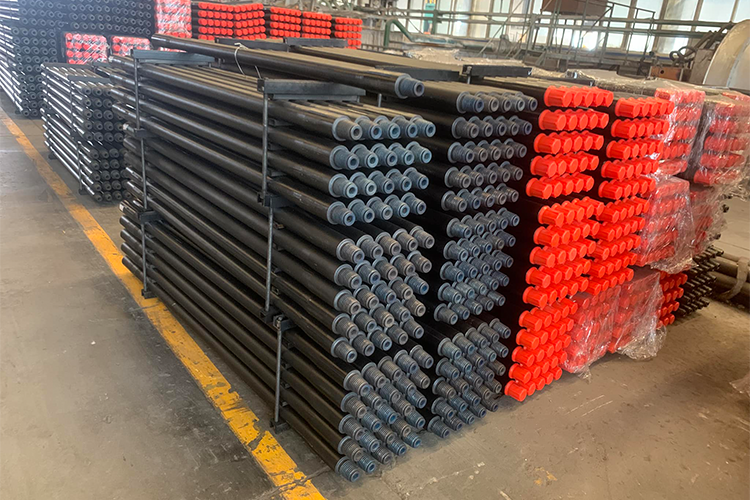
I remember my first big “oh shit” moment. customer called me fuming because his rods kept failing at the connection. I went out to the site, had a look at what he was running and realised – he was mixing up thread types. Some proprietary nonsense on one side and API REG on the other. They interlocked nicely, looked perfect. But under load? They were always fighting each other. That job cost him three days of downtime and a tonne of frustration.
That day taught me a lesson: the specs on paper are much more important than you think.
Let’s go through this. Not like a school book – I hate those. It’s more like you and I are out in the yard looking at a rack of rods and I’m telling you what I wish somebody had told me five years ago.
The API Thing – What’s The Big Deal About?
You must have heard the term “API 5DP” thrown about a million times. But what does it really say? API stands for American Petroleum Institute and Specification 5DP is essentially the drill pipe bible. It tells you how the pipe should be made, what should be in the steel, how the threads should be cut and — and this is the important part — it gives you a common language so that a rod from one manufacturer actually works with a rod from another.
At present, it is API Spec 5DP, 2nd Edition, May 2020, with some updates and errata issued in January 2025. Nothing earth shattering, mostly tweaks to hardness requirements and chemical composition specs, but it shows that even the “standard” continues to evolve.
And why should you give a damn? Because if your rods aren’t API compliant, you are gambling. Some of the cheaper manufacturers will say “it’s basically the same” or “we follow API standards” without going through the certification process. Do not purchase it. Third party verification = API compliance. Which means that your threads will be the same as the next guys threads. It means you’re not the one trying to piece together your rods at 2 AM.
Steel Grades – What’s the Difference? E75, G105, S135
This is the exciting part. A few grades of steel are defined in API 5DP . The number in the name is the minimum yield strength , in thousands of psi .
E75 –75,000 psi. Here’s your starter stuff. Suitable for shallow wells, light duty, low torque. To be honest? You don’t see much E75 in HDD anymore unless someones really trying to save a buck . And I’ll tell ya, generally it’s a bad idea to save money on steel grade.
G105 — 105,000 psi. This is your work horse. G105 will do the job just fine for most standard HDD jobs, medium depths, moderate torque. Has good fatigue resistance, decent toughness, and the price point is not crazy.
S135 – 135,000 psi. Now we’re talking.” Most maxi rig contractors use S135 because it gives you that extra muscle when the going gets tough. Deep holes, high torque, tough ground conditions – S135 handles it. The modern metallurgy in S135 has gotten pretty good, too. Better toughness, better fatigue life than the old formulations.
No one tells you this: a higher grade isn’t always better. I once had a customer who insisted on using S135 for every job, even the little 50 metre bores through sand. He was paying double for rods and getting the same results that G105 would have given him. Select the grade that fits your work. Easy shallow stuff? G105 is your pal. Gnarly, deep rock? Proceed to S135 and do not look back.
The reason that more than 90% of the drill strings out there are made of API high-strength alloy steel is that the balance of strength, fatigue resistance and cost just works.
Thread Types — Here’s where it starts to get confusing
Okay so threads This is the part that fools more people than anything else. And I get it, there’s a lot of them.
API REG (Normal)
They are the old-school warhorses. The deep, robust profile of REG threads, with rounded crests and roots, means that they are excellently resistant to stress and high torque loads. They have larger tool joints than other connections so they have more tensile strength and better resistance to bending.
The compromise? They don’t give you a flush internal diameter.” So you have some flow restriction and turbulence in your drilling fluid. But for demanding HDD operations where strength is priority number one? REG is a good choice.
API IF (Internal Flushing)
IF threads are supposed to have a smooth internal diameter through the connection. It improves fluid flow, reduces turbulence and makes your mud system more efficient.
But – and this is a big but – to achieve that flush profile, IF threads have thinner tool joints. So you’re trading some tensile strength for better hydraulics. Best for longer bores or where fluid flow is critical and the mechanical loading is more moderate.
NC (Numbered Connections)
The NC threads are numbered – NC23, NC26, NC31, NC38, NC40, NC46, NC50. They are a more modern standard and they have largely replaced some of the older designations. If you see NC31 on a 3.5 inch rod, that is telling you exactly what connection it is.
FH (Full Hole) and Other
FH threads are also present – another API variant. And then there are proprietary threads from the big equipment manufacturers. Vermeer has QuickFire, Ditch Witch has EZ Connect. They are built to work with their rigs specifically and have some advantages but you are locked into their ecosystem.
The Golden Rule of Thread
Here’s what I tell every customer: do NOT mix and match.
If API REG is on your string, make sure everything is API REG – rods, adapters, bits, reamers. Mixing REG with IF or NC with something else is asking for trouble, even if they are threaded together. The thread profiles are different, the stress distribution is different, and under load, they’ll fail at the connection every single time.
I have seen this happen countless times. Rods that appeared fine on the surface but micro-cracks were developing at the thread root as the connection was fighting itself. The bad part? You don’t see it coming until something breaks.
Quick Reference – Things to Look Out For
If you’re specifying rods for a job, here’s my cheat sheet:
For shallow, simple bores (less than 100m, soft ground):
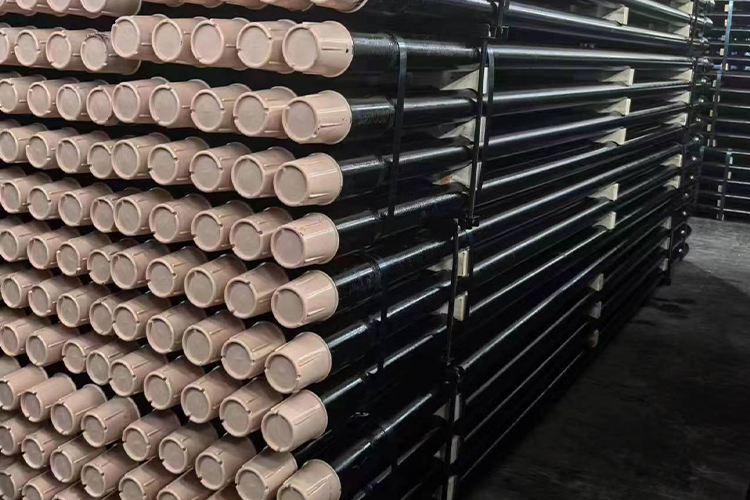
G105-steel
API REG or something thread works with your current tool
Wall thickness standard
For medium depth work (mixed ground, 100-300 m):
G105 or S135 depending on the torque requirements
API REG for strength, or IF hydraulics is an issue
See wear? Think heavy wall
For deep, difficult bores (300m+, rock, high torque):
S135, question no.
API REG for max strength
Premium connections if you can afford it
For long distance bores where the fluid flow is critical:
S135
API IF for improved hydraulics
Watch fluid velocity and pressure loss
One Last Thing
Look, drill rods are the backbone of your operation at the end of the day. They transmit torque, they carry the drilling fluid, they take the load. And the specs. The API standard, the grade of steel, the type of thread. They’re not just a bunch of letters on a data sheet. They’re the difference between a job that goes smooth, and a job that goes sideways at 3AM in the middle of a crossing.
That’s a lesson I learned the hard way, seeing that customer’s face when he realised his thread mismatch had cost him a week’s work. Don’t be that guy.
Know what you are running. Know why you are doing so. And if you ever feel unsure? Ring me. That’s what I’m here for.
SHARE:
More Posts for You
- Machine Learning for Prediction of HDD Drill Rod Failure – What is Possible?
- How bad can a dogleg be ? HDD drill rod fatigue : what are the safe limits ?
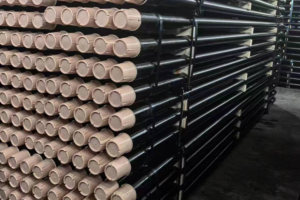
- HDD Drill Rod Steel Price Impact on Costs: 2026 Market Outlook
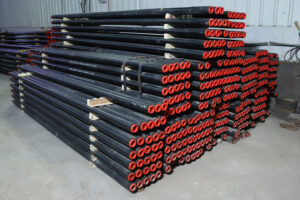
- OEM vs Aftermarket HDD Drill Rods: Warranty, Liability & Performance

- How a Bent Sub or Worn Saver Sub Impacts Your Whole Drill Rod Inventory
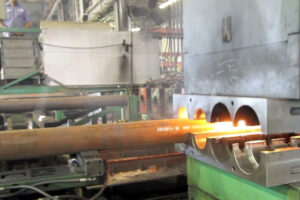
- How Much is Your Old HDD Drill Rod Worth for Scrap? (Current Pricing Knowledge)
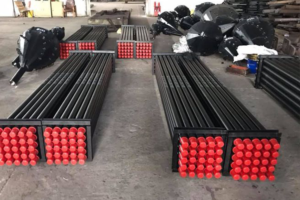
- 7 Deadly Sins of Handling HDD Drill Rods: Dropping, Dragging, Over-Speeding
- Urban Utility Drilling: Why Shorter, Stiffer HDD Drill Rods Are Often Better