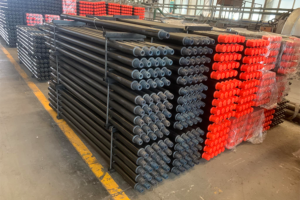
Firestick Drill Rod: The Industry Gold Standard for Tough Jobs
You know the feeling, when you’re 300 feet down a bore hole, the ground’s fighting you every inch, and you just know – if that rod breaks, you’re having a really, really bad day?
Yeah. Done that. And that’s the whole reason I want to talk about something that’s saved my bacon more times than I can count.
The “Oh Crap” Moment That Made All the Difference
I remember the first year in the field. Fresh-faced, thought I knew it all. Worked a mean rock job – the kind that eats drill rods for breakfast. We were using whatever was cheap and available because, you know, ‘a rod is a rod, right?
Nope. So wrong.
We cut the connection about 200 feet in. Not just broke it, but destroyed it. The threads were gone, the joint was toast, and we spent the next two days fishing the thing out of the hole. The client was pissed, my boss was pissed and I was standing there covered in mud wondering why I didn’t become an accountant like my mum wanted.
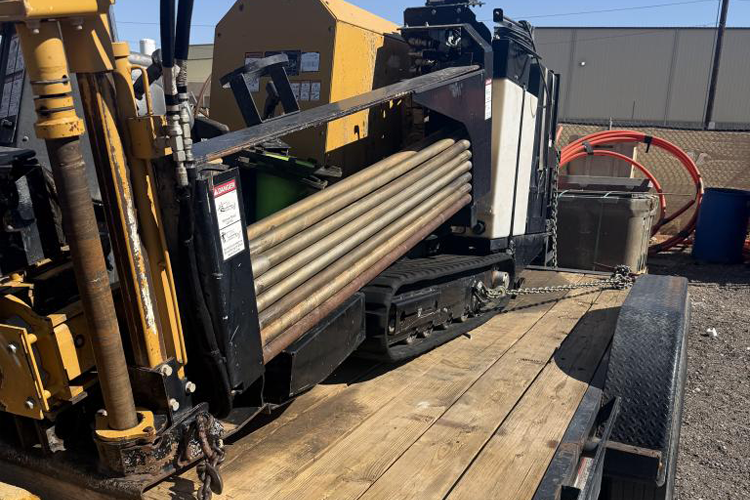
That’s when one of the old-timers on the crew walked over, looked at the mess and said, “Son, you get what you pay for. “Next time run Firestick.
I didn’t know it then, but that advice probably saved my career.
So what’s unique about Firestick hdd drill rod?
So let me break this down for you without getting too nerdy on you – because honestly, I geek out on this stuff and I could talk your ear off for hours.
Most of the drill rods available in the market are made of a material called S135 steel. Standard industry practice: 135,000 psi tensile strength. Nothing wrong with that. It does the job But, Firestick? Firestick utilises V145, a proprietary blend that Vermeer developed with their metallurgists. This brings the tensile strength to 145,000 psi.
Alright, cool, bigger number . So what, huh?
Now, here’s where it gets interesting. That extra 10,000 psi is more than just brute force. The V145 alloy has additional chemical properties which give it flexibility without sacrificing toughness. What that means in plain English is: when your rod string is bending and recovering thousands of times across a long bore — which it will do — the Firestick springs back straighter, longer.
I’ve pulled Firestick rods out of the ground after gnarly bores that would’ve turned cheaper rods into pretzels. They come back looking tired but upright. And that is the whole point.
The One-Piece Thing You Can’t Miss Out On
Here’s something that we don’t talk about enough. Much of the aftermarket drill pipe is what they call “three-piece welded construction.” The tube body is inertia-welded to tool joints at either end. Looks fancy. Sounds good.
But those welds? They’re points of failure in waiting. Those welds start to stress under the fatigue of tough drilling conditions—the torque, the thrust, the constant bending. And when they leave, they leave.
Firestick is a one piece forged. The whole damn thing is made out of one piece of steel. No weld. No soft spots. One solid piece, end to end.
Think about it this way, would you rather have a chain that has been welded together or one that has been cast from a single piece of metal? That’s right.
The Threads – Here’s where the magic happens
You know what takes a good rod and makes it a great one? It’s the threads. Has always been, will always be.
The firestick thread profile is another thing. Coarse and tapered. For quick makeup in the field. But here is the thing that puzzles me – when you tighten it up to full torque, the internal and external shoulders engage at the same time with the load flank on the threads. Firestick is unique when it comes to timing.
And what that means for you: a tight connection, bore after bore. No guesswork. “Is it tight enough?” No. No crossed threads when you are tired at the end of a 14 hour day.
Oh, and every piece of Firestick rod gets a batch number for traceability. If something goes wrong — and let’s be honest, things go wrong sometimes even with the best gear — you can trace it back. That sort of quality control is important.
The Fluid Flow Thing That Nobody Talks About
There is something that astounded me when I first learned of it. The inside diameter of the firestick rods is larger than you would expect. Why is that important?
More flow of drilling fluid. Immediately.
When you are in hard ground, you need as much mud as you can get down that hole to keep things moving, to keep the bit cool, and to carry these cuttings out. A rod with a restricted ID is a rod that is going to give you flow problems. Firestick leaves that channel wide open.
The “Gold Standard” Thing, Yeah, It’s Real
Look, I’m not a marketing fluff person. When industry types call something the “gold standard,” there’s usually a reason. Firestick has built its reputation.
That’s the rod that gets spec’d for the biggest, toughest jobs. The hard bores. The ones where precision steering is do or die. The jobs where you just plain, positively can’t afford a failure.
And the thing is – I’ve seen guys try to save a buck on cheaper rods for these jobs. I’ve seen them tear their hair out when the connections start getting loose after a few hundred feet. They’ve had days, days, of trying to get broken rods out of holes.
That way you don’t save money. You lose it. In abundance.
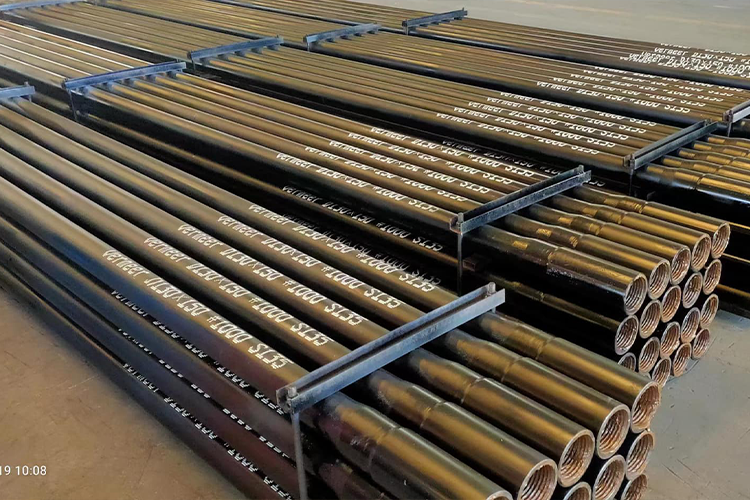
When do you run Firestick?
I’m going to be honest with you, not every job requires a Firestick. If you’re doing a short simple bore in soft ground? The Silver Series – Vermeer’s cheaper option – will do the job just fine. It’s a solid rod, built in the same facility, going through the same quality inspection process.
But when you get down to the nitty gritty — when you’re on rock, on long pulls, when steering accuracy is critical, when you’re pushing the limits of what your rig can do — that’s when you want Firestick in the hole.
This is how you can put it: Firestick is the rod that lets you sleep at night. The one you don’t have to be afraid of.
A Little History – Because I’m a Nerd Like That
The Firestick drill rod was developed by Vermeer in 1994-1995. Steel forging one-piece. It was a game changer Firestick was the one that started it all, but the rest of the industry eventually caught on.
Over three decades later and it still sets the standard. That is not accidental.
The Bottom Line – From Someone Who Has Been There
This is what I tell all my customers who ask me about drill rods:
Cheap rods will cost you in the long run. All the time. You might save a couple of bucks up front, but you’ll pay for it in downtime, in fishing operations, in ruined bores, and in pissed-off clients.
Firestick more expensive. I won’t lie to you about that. But it takes longer. It runs smoother. And when you are 400 feet down some godforsaken rocky hole, that peace of mind is worth every single penny.
I’ve been doing this for five years. I’ve seen rods from every maker, every price point. I keep going back to Firestick. Not because I’m paid to say it — I’m not. But I’ve seen what happens when you leave your job to anything less.
So yeah. That’s the pitch. Accept it or not. But if you’re running a tough job and you’re not running Firestick… well, don’t say I didn’t warn you.
Questions? Shout at me. I love talking about this stuff – maybe a little too much.
SHARE:
More Posts for You
- Machine Learning for Prediction of HDD Drill Rod Failure – What is Possible?
- How bad can a dogleg be ? HDD drill rod fatigue : what are the safe limits ?
- HDD Drill Rod Steel Price Impact on Costs: 2026 Market Outlook
- OEM vs Aftermarket HDD Drill Rods: Warranty, Liability & Performance
- How a Bent Sub or Worn Saver Sub Impacts Your Whole Drill Rod Inventory
- How Much is Your Old HDD Drill Rod Worth for Scrap? (Current Pricing Knowledge)
- 7 Deadly Sins of Handling HDD Drill Rods: Dropping, Dragging, Over-Speeding
- Urban Utility Drilling: Why Shorter, Stiffer HDD Drill Rods Are Often Better