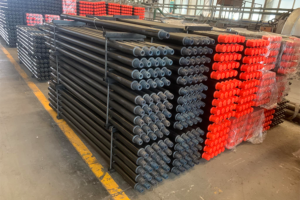
Safe Transport of HDD Drill Rods: Avoid Thread Damage During Hauling
Let’s get one thing out of the gate, I sell drill rods for a living. Been there for 5 years now. And if there’s one thing that makes me want to bang my head against a shipping container, it’s to see a beautiful set of HDD rods come back with chewed up threads before they’ve even seen a single foot of dirt.
You think the scary part is down in the hole. Rocks, friction, steering hell. But like? Some of the worst damage occurs on the back of a flatbed, going 70 mph down the interstate. There is not enough talk about it. Well, today let’s discuss how to move those valuable pipes without turning them into scrap metal. Get a coffee, or a beer – I don’t judge.
My “Aha” Moment (aka the day I wanted to cry)
Here’s the setup: I was early in my career and on a ride-along with a delivery driver. We were pulling a full rack of 4.5‐inch rods to a job site some three hours away. The driver was a great guy but not a drill guy and had everything strapped down like he was hauling lumber. Metal straps over the raw threads. No male end protection. Just, like, raw steel against raw steel.
By the time we got there 3 rods had nicks you could feel with your finger nail. The foreman glanced at it, took out his thread gauge and shook his head. Those rods never went down the bore. They headed straight back to the shop to re-thread – which takes time, money and a bit of my dignity.
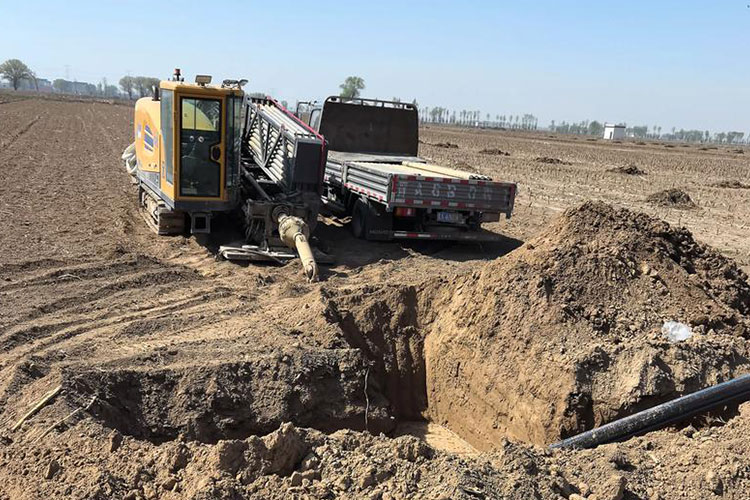
That was my attention call. Hauling is not “parking lot stuff. It’s the first fight. And if you lose it there you’re fighting an uphill battle all the way.
The real enemy? Vibration and poor habits
Here’s something no one tells you: It’s not the big bumps that kill threads. It’s that small, steady thrum. Highway hum. Engine harmonics The endless micro-movement that makes steel on steel work like sandpaper.
I’ve seen guys wrap towels around the threads, bless their hearts, but that’s like putting a Band-Aid on a bullet wound. Towels soak up moisture. They catch grit. And down they go. One hard brake and a male end was kissing a female end with enough force to gall the plating.
And don’t get me started on stacked rods without dividers. You load a dozen pipes in a truck, tie them down tight, and every time the truck leans into a turn they grind against each other. That ain’t haulage. That’s a rock polisher.
What Actually Works (from a dude who’s done the dumb stuff)
Ok enough complaining. This is what I learned from watching the smart crews work, and from my own mistakes.
First thread protectors are your best friend but only if they fit.
Not the cheap plastic pop-ons that crack if you breathe on them wrong. I mean the thick urethane or heavy duty steel caps that screw on correctly. And here’s the kicker – make sure they’re clean before you put them on. I’ve seen guys bust a cap over a thread that had mud on it, and that mud just acted like grinding compound the whole ride. Catastrophe.
Second, where you strap matters more than you think.
Never, never place a strap directly on a thread. Not even with a guard. That pressure from the strap distorts the protector and puts that force directly into the peaks of the thread. If you have to, put your straps over the plain end (the smooth side) or box end (the female side). Even better, use padded chocks between the rods and keep the straps tight but not guitar-string tight.
Third, separate the layers.
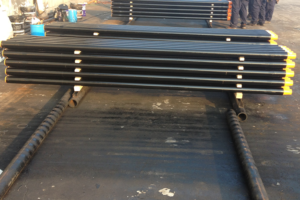
If stacking more than one layer, use wooden dunnage or rubber mats between each tier. Position the rods parallel to each other, not crisscrossing. I know it takes an additional ten. I also know it takes 2 days to re-thread. It’s your call.
A small ritual I swear by
Before any rod leaves our yard, I do a quick walk around with the driver. I show him exactly where the threads are, where the straps should go, and I give him a fresh set of thread protectors, not the ones that have been kicked around on the shop floor.
Then I say one sentence to him. “Treat these threads like you treat your own camera lens.” You wouldn’t put your DSLR in a toolbox with a wrench. Same feel.
One driver actually started taking photos of the strap positions before he left, so he could prove that he did it right. Loved that. I recommend it to all my customers now. It’s not paranoia. It’s responsibility.
The “Oops” moment we all have
Honestly, I still forget sometimes. Last month I loaded a set of 3” rods for a rush job, late, phone ringing off the hook. Put on the protectors, strapped them down, sent the truck.
Halfway there the driver called me. “Hey, you left the lifting cap on the male end.”
Heavy steel covers used for hoisting are called lifting caps. They are not for transport. They can move and hit on the shoulder of the thread. My stomach dropped.
No damage that time though. But it reminded me: even old dogs make mistakes. So I’ve got a checklist now taped to the door of my loading bay. Not because I’m a perfectionist, because I’m human.
From a customer who taught me
Old Mike in OK. Shoutout to. He’s got a small two rig deal going and he’s got this homemade system. He welded these little cradles on his trailer so each rod sits in its own ‘nest’. No stacking. No rolling . Each rod has its own place with rubber lining.
The first time I saw it, I laughed. “Mike, that’s way too much.
He looked me straight in the eye and said, “Son, I haven’t re-threaded a rod in four years. You do the math.”
I figured it out. He’s saved enough on repair costs to buy a new rig. And now I tell everyone: you don’t need fancy cradles, but you do need a system. Have a plan, be it rubber chocks, custom racks or just a smarter strap pattern. Don’t improvise.
The golden rule I took from a pipeline guy
I heard this from one old pipeline hand and I never forgot it. “Inspect your threads twice. Once before you load and once after you unload.”
Load, before you load, catch the damage that was done on the last job. You see what happened on the road after the unloading. That way you know who to blame – and more importantly, you know what to fix.”
I’ve begun doing this on every shipment.” I film the ends of the threads on my phone, as the truck drives away. Half a minute. That video has saved my ass more than once from a customer saying “they arrived damaged.”
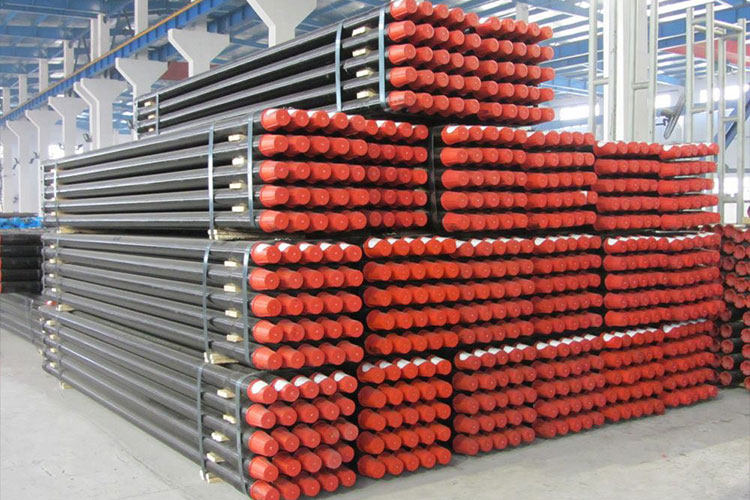
Let’s talk about the small things that make a big difference
Lightly oil the protectors. Not the threads, the guards. If they get wet it stops them grabbing.
Check the tension on your tie downs after the first 50 miles. Steel is relaxed. The straps fall off. Pull over and make them snug. Two minutes.
Do not use bungee cords. I see this too often. Stretch Bungees. Use proper chains or ratchet straps with padding.
If you hear any clanking while driving, pull over immediately. That sound is your rods crying for help.
And why am I telling you this all
Look, I sell fishing rods. Certainly I want you to buy more. But I’d rather sell you fewer rods over a longer period of time because you took care of the rods you had. Happy customers return. My competitors get the grumpy customers.
And you know what? I get a little giddy when a customer will send me a picture of their rods all snug and protected on a trailer. It’s like watching your kid put on a helmet to ride a bike. Proud Father Moment.
So here’s my challenge to you
Next time you’re loading up a truck, whether it’s a full rack or just a few singles, take ten seconds. Check out those threads. Feel the vibrations, the turns, the sudden stops. Ask yourself, ‘If I were that tread, would I survive this trip?’
If the answer is no, alter something. Add padding. Add a strap. Replace a protector.
And if you ever have any doubts, call me. No joke. I don’t care if you purchased from us or not. Let me walk you through it. Because a damaged rod is a wasted rod, and wasted rods make this whole industry a little less pretty.
One more story, because why the hell not
A couple of weeks back I had a guy call me that just drove 400 miles with a load of rods. He was freaking out, telling me he could hear a ‘weird ping’ every time he hit a bump.
I asked “Did you use steel protectors?
“Yes.”
“Did you put rubber washers between the protector and the shoulder?
Nothing.
“Uh…no.
We pulled off the protectors over the phone. All had a circular dent of a minute size from metal-to-metal contact on the shoulder face. Not enough to snap the rod, but enough to put a stress point on it. The next afternoon he spent filing those shoulders.
He phoned me back and said, “I owe you a case of beer.”
“I said, “Just buy some rubber washers. And a lottery ticket maybe.
Last thought (I promise)
Rod pulling in HDD is no rocket science. But it’s not mindless either. It’s the sweet spot between care and common sense. Think of the journey as part of the job, not just the boring bit before the real work starts.
When you pull up to that bore site, threads shiny and unblemished, and you drop those rods in the rack with that satisfying clunk? That feeling is worth the five extra minutes of prep work.
Now check your straps. I’ll be around, probably drinking too much coffee and arguing with shipping schedules.
SHARE:
More Posts for You
- Machine Learning for Prediction of HDD Drill Rod Failure – What is Possible?
- How bad can a dogleg be ? HDD drill rod fatigue : what are the safe limits ?
- HDD Drill Rod Steel Price Impact on Costs: 2026 Market Outlook
- OEM vs Aftermarket HDD Drill Rods: Warranty, Liability & Performance

- How a Bent Sub or Worn Saver Sub Impacts Your Whole Drill Rod Inventory
- How Much is Your Old HDD Drill Rod Worth for Scrap? (Current Pricing Knowledge)
- 7 Deadly Sins of Handling HDD Drill Rods: Dropping, Dragging, Over-Speeding
- Urban Utility Drilling: Why Shorter, Stiffer HDD Drill Rods Are Often Better