Extend HDD Drill Rod Life by 30%: Simple Practices That Boost Your ROI
Take a seat. Or, you know, lean on the tool shed. I just came in from the yard, walked by the scrap bin and I swear I had a little moment. I saw three good drill rods there, condemned to the “retirement pile”, and I just shook my head. They weren’t even that old. They just got… beaten. Overlooked. Thought they were unbeatable
And that got me to thinking. Because I’ve been in this non-destructive trenchless world for five years now. Five years of grease, mud and those “oh no” moments when you hear a crack from 80 feet down. And really? Most of the time that crack can be completely avoided.
My job title says “Sales,” but the way I see it, I’m more of a “Drill Rod Life Coach.” No one wants to buy new steel every other week. Your wallet doesn’t like it. Frankly neither does mine when you’re grumpy about the costs.
So let’s talk about how to get another 30% of life out of those expensive metal tubes. Nothing magical, nothing about a new “proprietary coating” I’m trying to upsell you on. Just simple, dirty, common sense stuff that I’ve seen save guys literally $10,000 a year.
Get a coffee. Or a beer. Let’s talk.
The “Torque” Trap: Why You Should Go Easy on the Gas Pedal
I used to work with this guy called Mike. Old school His philosophy was essentially “if it ain’t broke, you’re not trying hard enough.” He’d crank the torque to 11 and just send it.
Sure, the first 50 feet went pretty quickly. But he also went through rods like corn.
That’s the ‘aha’ I had three years ago, watching a rig in Texas. It was a slow, agonisingly slow process, but the operator’s rods were pristine. “The machine has the power but the ground don’t want it,” he told me. You’ve got to feel it.
Basically, your drill rod is a big torsion spring. If you twist it too tight it stores energy. Then when you hit a little hard spot, that energy releases in a snap, a shock load, to be sure. That shock load is what causes the micro cracks. You can’t see them with the naked eye, but they’re there. Little timexplosives.
My rule of thumb? If you’re pushing and the pressure spikes, don’t just throw more torque at it. Stand back. Turn a bit faster or slower to find the “sweet spot” where the cuttings really want to go. Think about driving a stick shift car – you don’t just stomp the accelerator in 5th gear up a hill do you? No.” You miss a gear. You pull it off. That finesse is why your rods stay straight and uncracked.
Mud Isn’t Just “Dirt Water” – It’s Your Rods’ Best Friend
Okay, now I get on my soap box. I mean, I can’t tell you how many job sites I go to where the mud guy is just… guessing. “Yeah, it looks wet enough,
Nope. No, no, no.
Your drilling fluid does more than just clear cuttings. It’s the oil for your drill rods. Think about this: You’ve got a steel rod spinning against a steel casing or the borehole wall. That’s friction with no good lubrication. Friction = Heat Heat = fatigue of metals. Those pretty little bends and kinks in your pipe? Metal fatigue.
I remember one job in Rocky clay, absolute nightmare stuff. The operator was burning up a rod every couple of days. I asked him what his bentonite mix was. He shrugged.
We spent an hour on his mud programme. Just thick enough, just thin enough to form a good filter cake on the borehole wall.”
The outcome? That was all of that set of rods for the rest of the job. Three weeks.
You have to treat your mud tank like a kitchen. Making a good soup isn’t just dumping in ingredients. Do the math. Check your Marsh funnel. If your rods are hot to the touch you are doing it wrong. That heat is actually cooking the temper out of your steel.
The 5-Minute Routine That Saves Thousands
Let us talk of the sunset hour. I know you’re tired. I know it’s hot as hell or it’s freezing cold and you want to get in the truck and go home.
But I’m going to let you in on a secret: your last 10 minutes of the day are more important than your first 10 hours.
A guy in Oklahoma taught me this. He was obsessive. Each evening he would take a broom handle with a rag tied to the end, dip it in diesel and swab out the female threads of each rod. Then he’d wirebrush the male threads until they gleamed.
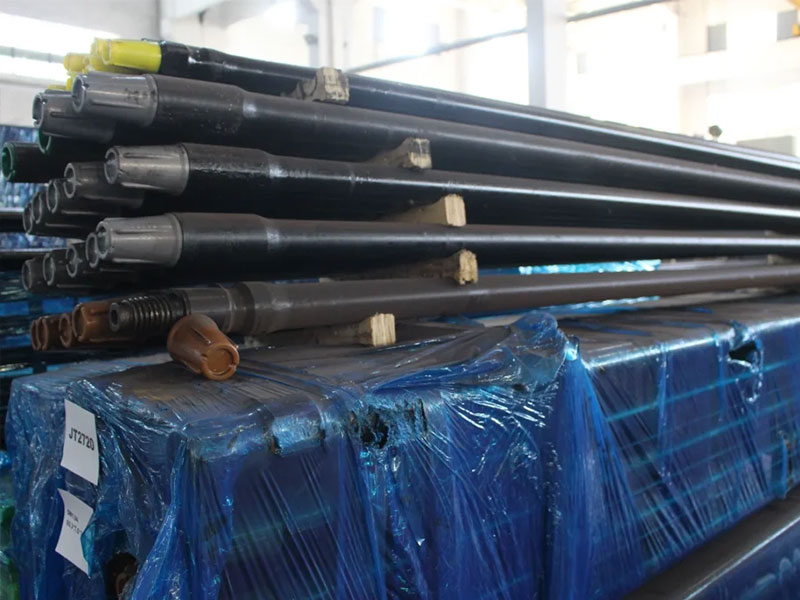
I thought he was wasting his time. Until I saw his inventory of rods after 18 months. They still looked brand new.
Now think about the physics of this. Those threads are under great strain when you make a connection. If there is a little sand or dried mud in there it will act like sandpaper. Every time you make and break that joint you are grinding metal away.
Here’s my little “Zen” moment for you: Make cleaning the thread a ritual. Keep a dedicated bucket of clean diesel or thread lubricant right at the rig. Get the good thread compound with the zinc or copper in it, not the cheap stuff. That stuff is not grease, it’s a “sacrificial metal. It takes the wear for your rod threads not to.
Do a five-minute clean up. Thoroughly work in compound for two minutes. The money you’ll save on thread repairs and broken pins? I swear it’ll pay for your next vacation.
Ditch the “Good Enough” Attitude on Your Tool Joints
I got one pissed off customer on the phone. “Your rods are shit,” he said. The pin just came out of the hole!”
I went to his house. I took up the broken rod. I examined the pin. And I just turned it over in my hands and sighed. “Did you use a torque wrench? I said.”No,” he said. “My arms are strong.”
Well, there’s your problem, buddy.
Putting too much torque on a connection is just as bad as putting too little. If you don’t tighten it enough it’ll come loose on you and you’ll lose your string. But if you torque it down too tight , especially with that 4 foot cheater bar you welded together , you are stretching the metal beyond its yield point .
That shoulder on your stick? The one that touches when it’s all fabricated? That’s a load shoulder. It’s designed to withstand compression. If you over torque you’re distorting that shoulder and all the force goes suddenly onto the threads. And threads are skinny little guys—they just can’t take that kind of abuse.
Hydraulic torque wrench. Or at least a dependable torque metre on your power unit. And keep an eye on the numbers. I don’t care if it’s a “just a 500-foot job.” Treat it like a 5,000 foot job. Your sticks just don’t know better.
The Bottom Line (And Why I Really Care)
Look, I’m not writing this to sell you a new set of rods today. I’d rather you made your current set last so long you forget you bought them, honestly.
Why is that? Because when you do finally need new rods – and you will – you’re going to remember this talk. You’re going to think, “That guy gave me good advice and saved me money. And you’ll be ringing me.
That’s not rocket science. It’s really about respect for the steel. Respect the dirt. And respect for your own pocketbook.
Verify your threads. Flush your mud tank. And for God’s sake don’t test your connections with a pipe wrench.
Have a question? Or a scary story? I want to hear it. Just send me a message. Now get back to work and don’t forget the thread compound.”
SHARE:
More Posts for You
- Machine Learning for Prediction of HDD Drill Rod Failure – What is Possible?
- How bad can a dogleg be ? HDD drill rod fatigue : what are the safe limits ?
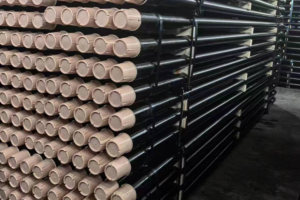
- HDD Drill Rod Steel Price Impact on Costs: 2026 Market Outlook
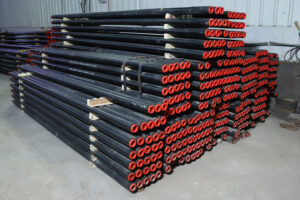
- OEM vs Aftermarket HDD Drill Rods: Warranty, Liability & Performance

- How a Bent Sub or Worn Saver Sub Impacts Your Whole Drill Rod Inventory
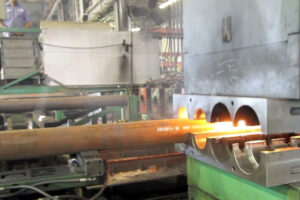
- How Much is Your Old HDD Drill Rod Worth for Scrap? (Current Pricing Knowledge)
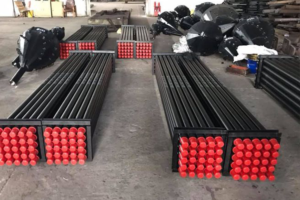
- 7 Deadly Sins of Handling HDD Drill Rods: Dropping, Dragging, Over-Speeding
- Urban Utility Drilling: Why Shorter, Stiffer HDD Drill Rods Are Often Better