Mud Flow and Drill Rod Relationship: How Fluid Circulation Impacts Rod Longevity
I’ve been selling and troubleshooting drill rods for a living over the last five years, and if there’s one thing I’ve learned, it’s this: We overcomplicate the hell out of mud.
Really. We discuss polymer weights, sand content and viscosity as if we were mixing rocket fuel. And don’t get me wrong, that stuff counts. But today I want to talk about the one thing no one pays attention to until their pipe blows like a banana peel.
The flow.
Let me share a short story about a job site in West Texas that changed my view of drill rods forever.
The Day I Quit Blaming the Steel
A regular customer called me in a panic about three years ago. We’ll call him Dave. Dave is the kind of guy that runs his rig hard and doesn’t call unless there’s literally smoke coming out of it. For 15 years he’s been drilling. He knows what he is doing.
But today he was snapping rods like toothpicks. And not the cheap ones either, I mean premium grade, heat treated, expensive as hell rods that we had shipped him two months ago.
His first words? “Your steel is crap.”
Ouch.
So I drove four hours out there, expecting some kind of metallurgical nightmare. So I walked out to his rig and looked at the mud return and almost choked. “Chocolate milkshake coming back out of that well. Thick. Mushy. Not moving hardly.
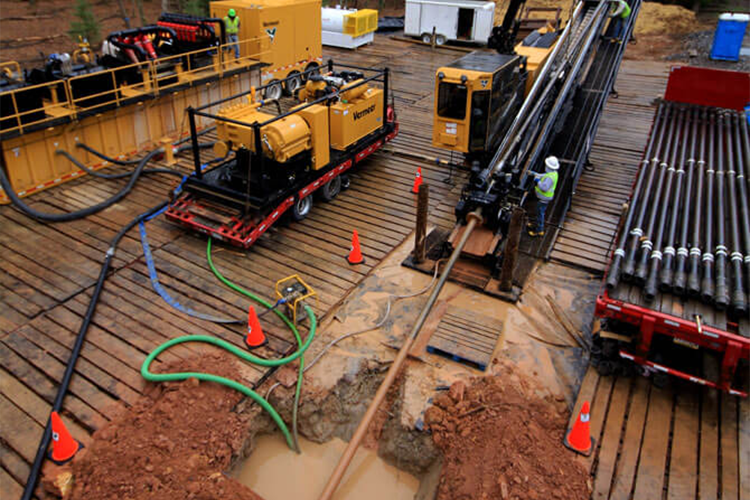
“What’s your flow rate?” I asked Dave.
He shrugged, nodding towards the pump. “Wide open. Same as usual.”
And there it was. The “Same as always” problem.
He was pushing that heavy, viscous mud along at maximum pressure, but the volume—the actual flow—was oozing. It wasn’t that the fluid was washing the cuttings away, it was just forcing them on. Those cuttings were being recirculated, grating against the rod like sandpaper in a washing machine.
We changed the rods out and dropped the pressure and increased the flow volume by thinning the mix just a little. Two days later he called back. There wasn’t a single broken rod.
That was my ‘Aha’ moment. It wasn’t the steel. That was the ride the steel was having.
Flow is not pressure, it is velocity
It took me way too long to figure this out . The mud flow is the bus that takes the dirt out of the hole .
If your flow is too slow, that bus stops. Cuttings are dropped from suspension and accumulate around your drill rod. Your rod is no longer spinning on clean fluid . It is spinning on a pile of crushed rock .
Think of it like this: If you rub sandpaper on a piece of metal for 10 hours it will get thin That is exactly what happens when your penetration rate is faster than your flow can keep up with . Your OD of your rod .
We call it “OD wear” in the industry. It’s just your rod slowly getting sanded down by it’s own garbage. And when that OD chews down just a few millimetres? Less thickness of wall. Less torque capacity, less wall thickness. And less torque capacity means fracture.
So don’t be looking at your pump and looking at the pressure gauge. Pressure is only the force. The cleansing is flowing.
The “Suck” vs. “Blow” Reality
Here’s some weird shit nobody tells you in training: High pressure, low flow is actually harder on your rods, than low pressure, high flow.
Why the hell? Because if you’re running a bent motor or a mud motor that high pressure fluid is pushing back against the rod. It creates a ‘piston’ effect that pulls your string tight. Add in that tension to rotational stress and you’ve got a recipe for fatigue cracks.
I always tell my guys: Let the flow take you. Let the pump pump the volume. If you have to increase the pressure to over 2000 PSI to get the cuttings to move, you are using the wrong fluid for the ground you are in.
Stop fighting the earth. Dilute the mud. Slightly open the bypass. Leave some room for that fluid to flow.
The Sweet Spot for Rods Health
So how do you know if you’ve got it right?
I go with the “Popcorn Test”. No, that’s not a real thing, I just made that up. But check your shaker box. Are the cuts coming out clean and kind of dry? Or do they run off the edge like wet concrete?
If they are wet and heavy, it means your flow is not strong enough to push them all the way out. They’re coming down again.
If they are dry and bouncy you are in the goldilocks zone. That means you have enough fluid velocity to carry the weight of the cuttings all the way to the surface in one trip.
Then your drill rod only contacts clean fluid and clean borehole walls. No griding. No sanding. Just a nice rotation.
Look, I Sell Steel. But I’m Selling You Time.
I’d like to tell you that if you buy my premium rods it will solve all your problems. And of course better steel helps. But I’ve seen guys take our cheapest rods and get 4,000 feet out of them because they babied the mud flow. And I’ve seen guys break 800 feet of our top-tier, armoured rods because they ran the pump like a fire hose and didn’t pay attention to the returns.
“The rod doesn’t care how much you paid for it. It has feelings about how you treat it.
So the next time you’re on a job and you hear that pump labouring, or see those cuttings falling back into the hole, don’t just increase the pressure. Beat. See the flow. Tweak the blend.
Your drill string will appreciate it. And more importantly, you don’t have to make that angry phone call to me on a Friday afternoon.
I hate those calls… Dave doesn’t like it. And your wallet doesn’t like having to buy replacement rods 2 months early.
Stay dirty my friends. But keep it flowing.”
SHARE:
More Posts for You
- Machine Learning for Prediction of HDD Drill Rod Failure – What is Possible?
- How bad can a dogleg be ? HDD drill rod fatigue : what are the safe limits ?
- HDD Drill Rod Steel Price Impact on Costs: 2026 Market Outlook
- OEM vs Aftermarket HDD Drill Rods: Warranty, Liability & Performance
- How a Bent Sub or Worn Saver Sub Impacts Your Whole Drill Rod Inventory
- How Much is Your Old HDD Drill Rod Worth for Scrap? (Current Pricing Knowledge)
- 7 Deadly Sins of Handling HDD Drill Rods: Dropping, Dragging, Over-Speeding
- Urban Utility Drilling: Why Shorter, Stiffer HDD Drill Rods Are Often Better