Sandy Soil or Clay: How Your Ground Conditions Influence Your Drill Rod Selection
You know what’s funny? When I got in this business five years ago, I thot a drill rod was a drill rod. I mean, it’s a pipe, threaded steel, right? *How difficult could it be?
Ooh, I was such a sweet summer child.
I learned that lesson the hard way, on a job site, in West Texas, middle of July, sun so hot you could fry an egg on my hard hat. The soil there? Just sand. Like sand from the beach but without the fun ocean part. We were throwing our normal rods that work great on 80% of our work back home in the Midwest clay.
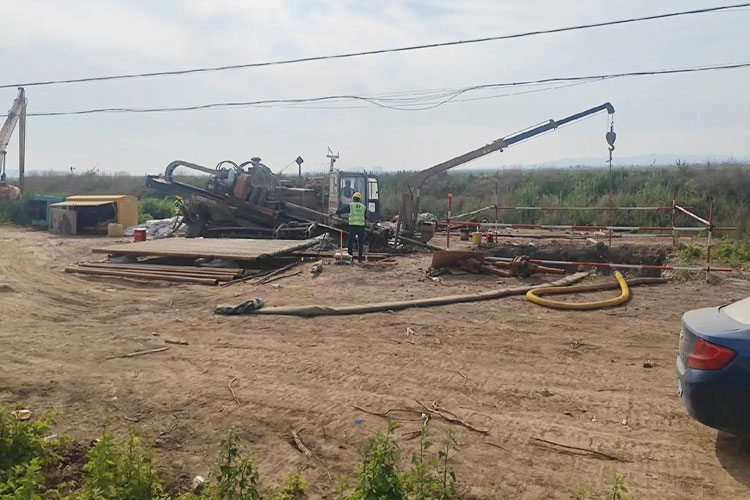
And in four hours I watched a $1200 rod turn into a piece of twisted modern art. The threads were gaulded, the outer diameter was worn down like it had been sandblasted for a decade and the crew was looking at me like I’d sold them a lemon.
That was my light bulb moment. Not a good one but a memorable one.
So let’s take this apart, man to man. Because if you are out there bidding on jobs and just grabbing whatever rod is sitting in the yard you are leaving money on the table. And I hate to see that.
The Abrasive Monster (also called The Sandy Nightmare)
But first, let’s talk about sand, because that Texas job still haunts me.
Sand is Mother Nature’s abrasive. It doesn’t matter how good your heat treat is, or your expensive steel. It’ll eat up the outer diameter of your rod faster than my dog can chew through a rawhide bone. The actual killer? It gets in the threads. You know that feeling when you’re forging a connection and it just doesn’t feel “right”? That’s sand. It’s gritty, mean, and if you don’t keep it clean religiously you’ll gaul those threads so bad you’ll need a pipe wrench and a lot of bad words to get them apart.
So what do you do with sand?
You want tough. Not just surface hardness, but also through-hardness. You want a higher Rockwell rating, you want a rod that’s going to resist that abrasion. But here’s the kicker, and this is where the textbooks get it wrong – if you go too hard, you get brittle. And brittle in sand means it breaks when you hit a hidden rock or a patch of caliche. So you want that sweet spot. I always tell my guys, in sand you’re not looking for the toughest rod, you’re looking for the toughest skin on a rod that still has some give.” Imagine it as a good pair of work shoes. You want leather that’s tough enough for gravel but flexible enough that it won’t crack when you bend over.
Another trick? Flushing. You are interested in a higher flow rate of drilling fluid in sand . It’s not because you need the cooling, it’s because you need to get that sand out of the hole before it settles back down and grinds like a grinder on your rod. If your mud engineer tells you different, buy him a beer and tell him I said he was wrong.
Sticky, Slick and Sneaky (The Clay Tango)
Now let’s get into clay. Oh clay. Diva of soils.
Sand is abrasive, clay is sticky. It doesn’t grind your rod down. It grips it. Like, not even a good hug, just a weird, tight hug from a relative you never see. That clay builds up on your rod and forms what we call a “ball” or a “plug.” And suddenly your rod isn’t a 3.5-inch diameter stick – it’s a 5-inch mud-encrusted monster. That means more torque, more drag and a very unhappy drill rig.
But here’s the really sneaky thing about clay. It’s slick. When it’s wet, it makes this low friction film that actually makes your rod spin easier, which sounds good, right? Wrong. Because that slickness means you lose the friction you need to actually push the hole forward. You will just keep on spinning and your pipe will just be polishing the hole instead of drilling it. I have seen crews spend a whole day using too much down pressure, thinking they were not making progress because they were not pushing hard enough. No. The rod was hydroplaning on that snotty clay.
So for clay you need another animal. You want a rod with the higher torsional strength. You need a shaft that can take that constant, high-torque stress without snapping off. Because when that clay grabs, and you go to back-ream, your rod’s going to be under more rotational stress than a politician in a scandal.
And the thread design? Oh man, this is where I get geeky. You’re looking for a thread profile that’s a little more aggressive on clearance in clay. You want something that cleans itself when you pull it out. Because that clay packs into the thread valleys, and if you’re using a fine pitch thread in heavy gumbo clay, you’re going to cross-thread it eventually. It’s not a matter of if, it’s a matter of when. I’ve seen guys buy the cheapest rods with regular API threads and a week later they’re crying because they couldn’t get the box end to stab into the pin because it was packed solid with dried clay.
The One Question I Now Ask Every Customer
The first question I ask a customer, before I even talk about prices or delivery times, is “What does the dirt feel like when you rub it between your fingers?”
I’m not kidding. I’ve had phone calls with guys in Georgia and guys in Arizona, and I literally say, ‘Go outside, dig a little hole, and text me how it feels. If it’s gritty and coarse and falls apart, that’s sand. You need the abrasion resistant rod with the tougher skin and better surface hardening. I’m going to spec you something with a thicker wall thickness too because you’re going to lose OD over the life of that rod and I want you to get at least 30,000 feet of life out of it before it gets too worn to seal.
If it’s smooth and greasy and you can roll it into a ball like Play Doh, that’s clay. You’re getting the high torque rod but I’m also going to suggest that you take a look at our rods that have a special surface treatment on it that reduces the adhesion of the clay to the steel. It’s not a cure-all, but man, it will cut your cleaning time in half and your crew will thank you for not having to beat mud off with sledgehammers at the end of the day.
And here’s the embarrassing part I will admit to: I used to quote every customer the same rod. I named it the “all rounder.” I was being idle. And I tell you what: I’m losing customers. Not that my rod was bad, but I didn’t listen to their ground conditions. One guy in Florida all sand, told me my rods wore out in two months. 2 months! I felt so bad. I replaced them at cost, and this time I gave him the right steel. He is still a customer to this day, but I still cringe at the thot of it.
The Gut Check Advice
So here’s my no-BS advice to you, whether you’re a veteran driller or a newbie estimator:
Don’t trust geological survey maps blindly. I’ve seen maps that said “sandy loam” and the ground was concrete. Go touch some earth. “It’s free, and it is the most accurate test you’ll ever take.
Don’t waste your money on the wrong pole. I understand the higher end rods will cost 20-30% more up front. I understand we all have to bid jobs. But I’ll tell you what, a snapped rod in sand means pulling the whole string and that’s not just a rod cost, that’s rig time, labour and your reputation. You save money long term, and my finance guy hates when I say that because I’m supposed to sell you more rods, but I’d rather sell you better rods and see you come back for the next job.
Clean your threads. No, really. Wash ’em. I don’t care if you are on sand or on clay. That paste that builds up on the threads is an abrasive compound, no matter what it is made of. Keep a bucket of clean water and a brush on deck. Dos minutos. It saves you thousands on thread repairs.
The Bottom Line (from a dude who’s been there)
See, your drill rod is the link between you and the product you’re installing. The hero you never hear about. And to think we’re going to use this as a one-size-fits-all solution is like wearing hiking boots to a wedding, you can do it, but it’ll be uncomfortable and everyone will know you’re doing it wrong.
Sand wants to eat your pole. Clay will bend your rod. You have to choose the battle you want to fight.
So next time you’re on a site, take a moment to look at the spoils coming out of the bore. If it’s blowing in the wind call me I’ll get you the rods. Sand-fighter rods. If it’s stuck to your boots and costing you five pounds a step, call me. “I’ll fetch you the clay slayer rods.
And if you don’t know? Call me even so. I’ll bet you this, I’ll come out to your site, get my hands dirty with you, and we’ll figure it out over a lukewarm coffee and some bad gas station tacos.
Because in the end it’s not about selling you a product. It’s about making sure that when you pull that string out of the ground at 5 PM the rods look like they can do it all over again tomorrow. And I want that for you so much.
SHARE:
More Posts for You
- Machine Learning for Prediction of HDD Drill Rod Failure – What is Possible?
- How bad can a dogleg be ? HDD drill rod fatigue : what are the safe limits ?
- HDD Drill Rod Steel Price Impact on Costs: 2026 Market Outlook
- OEM vs Aftermarket HDD Drill Rods: Warranty, Liability & Performance
- How a Bent Sub or Worn Saver Sub Impacts Your Whole Drill Rod Inventory
- How Much is Your Old HDD Drill Rod Worth for Scrap? (Current Pricing Knowledge)
- 7 Deadly Sins of Handling HDD Drill Rods: Dropping, Dragging, Over-Speeding
- Urban Utility Drilling: Why Shorter, Stiffer HDD Drill Rods Are Often Better