Heat Treatment Decoded: The Role of Hardness and Tempering in HDD Drill Rod Performance
The day I saw a $2,000 rod snap like a toothpick
I’ll give you a picture. It was about 4 years ago, when I was still the “new guy” on the sales team. I was out on a job site with one of our larger clients, a grizzled old super named Red. Red had been doing directional drilling before I graduated from high school. The guy was showing off a new expensive set of drill rods he just bought from a competitor – because they were “cheaper”, you know.
I kept quiet. I just watched it.
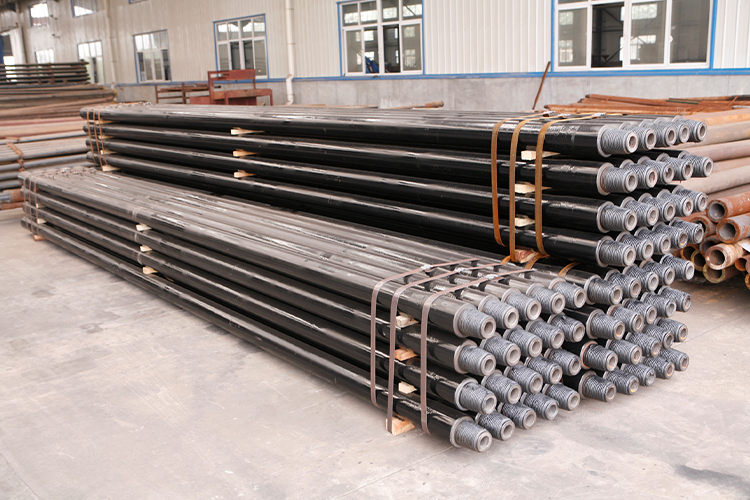
The rig grunted about 40 feet into the bore, there was a sound like a gun shot, and that shiny new rod twisted right off at the threads. The entire crew fell silent. Red kicked the cracked piece across the mud pit and glanced at me. “Well, kid,” he said, “Explain to me how my cheap rods just cost me three hours of downtime.
That was my “Aha!” moment. It was not about steel. It wasn’t the design of the thread. It was concerning the heat treat. And that’s what I want to talk about today. Not because I want to sell you something, but because I really hate to see good drillers lose money on bad pipe.
The ‘Bake vs. Broil’ Analogy (Stay With Me)
I’m no metallurgist. I’m a guy that talks to drillers by day, watch rigs run and sometimes gets my boots stuck in the mud. But I’ve learned enough to know that heat treatment is pretty much like cooking a steak.
You can have the most expensive cut of meat in the world but if you put it in a 900 degree oven and leave it there for an hour, you’ve got a hockey puck. But you just wave a Zippo at it and get a raw bloody mess that will give you food poisoning.
Same way with drill rods. We’re playing with fire, literally, to change the internal structure of the steel.” But here’s the dirty secret the cheap manufacturers won’t tell you: It’s not about making the steel as hard as possible. It’s about making it hard.
Hardness: A Double-Edged Sword
When I first started out I thought “harder=better”. Seemed logical, didn’t it? If it’s a harder steel, it’s not going to wear out, it’s not going to scratch, it’s going to last forever.
Not correct
Hardness is determined on the Rockwell scale. The higher the number, the harder the surface is. This is great for the outer skin of the rod as it resists abrasion from the sand and rock you’re spinning through. That way, the rod doesn’t wear down to a toothpick over time.
But here’s the thing: Hardness is brittle.
Imagine a glass window. It’s tough. It’ll scratch a nail. But you hit it with a hammer in the wrong place and it blows to smithereens. If you crank the hardness up to the absolute max with a drill rod, you’re basically turning it into glass. The first time you hit a hard ledge or get a torque spike SNAP. You’re reeling in a fish, not boring.
I’ve seen rods with a Rockwell of 40+ shatter so badly that they left spirals of steel in the borehole. Getting out is a nightmare. So we don’t go for the highest number. We are after the right figure.
Tempering: The “Chill Pill” For Steel
This is where the magic happens. And honestly, this is where most factories cut corners because it costs money and time.
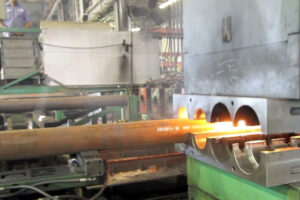
When we quench the rod, that is basically dunking it in oil or water to harden it up, the steel is stressed out. It’s furious. All the molecules are crammed in together, stiff and nervous. Leave it like that and it’s only a matter of time before it busts.
So we put it back into the oven. But this time, we turn down the heat. We let it sit at a lower temperature for a certain amount of time. That is moderation.
What we’re doing is allowing some of that stiffness to go. We’re allowing the steel to give a little bit. Bend instead of break. It sacrifices a little of that surface hardness for a huge increase in toughness.
Why tempering can make or break your drilling day
Let me give you a real world equivalent. I had a customer in Texas that was drilling in this hard abrasive clay and limestone mix. He was burning rods Not snapping them. Burning them. Sure the rods were hard and resistant to wear, but they had no ductility whatsoever. Every time the rig torqued up the rod would micro crack inside. After three or four bores, the rods would just get fatigued and snap in the middle of a pullback. He was losing $500 rods like candy.
We sent him a set of our rods with a slightly lower hardness (difference of like 2-3 points on the Rockwell C scale) but a much longer tempering cycle. He actually called me suspicious the first time he used them. “These feel different on the threads,” he said. “They seem… softer.
I said run them anyway and track the footage.
Two weeks later I get a text. “Still on the same rods. 3000 feet. No pause.
That’s the spirit. That lower, slow bake allows the steel to take the shock loads and the twisting forces that occur in every single foot of a horizontal bore. This allows the rod to “spring” back rather than “snap.”
The Cheap Rod Trap
I’m going to climb up on my soapbox for a moment.
There are factories out there that run their heat treat as fast as possible, I won’t name names but you can probably guess. They harden it . To save electricity . Skip the tempering cycle or reduce it to a mere ” flash ” . The rods come out looking shiny and gorgeous. The Rockwell number looks good on the spec sheet.
But they’re ticking time bombs.
That “cheaper” price-per-rod? The minute the rig stops turning, it’s gone. You are paying for a broken rod, the lost drilling fluid, the downtime for your crew and the anxiety of fishing a broken piece of pipe out of a 200 foot hole. It’s better to sell you a more expensive rod that lasts 500 hours than a cheap rod that lasts 100 and ruins your week.”
My two cents: Asking the right questions
If you’re in the market for drill rods, please, please, please don’t just ask “how hard is it?”
Say: “How did you harden it? Ask about soaking time. Question the quenching medium.
If the sales guy looks at you blankly walk away. Really. If he doesn’t know the tempering cycle he’s just selling scrap metal with a paint job.
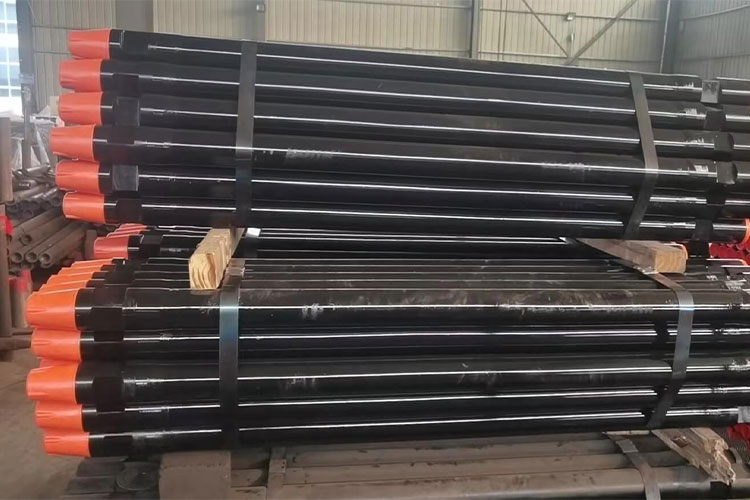
I’m not saying our rods are perfect, we’ve made mistakes too. Two years ago we had a batch that had a cold spot in the tempering furnace and we had three customers snap rods in one week. We just ate the cost and replaced them all. That’s the thing about heat treat, it’s unforgiving. It’s not a guess. It’s science.
So the next time you’re out on the drill pad and you feel that torque spike coming on, just remember this: the only thing standing between you and a bad day is how that piece of steel was treated in the oven months ago.
We’re not just making holes. We are working on the metallurgy.
SHARE:
More Posts for You
- Machine Learning for Prediction of HDD Drill Rod Failure – What is Possible?
- How bad can a dogleg be ? HDD drill rod fatigue : what are the safe limits ?
- HDD Drill Rod Steel Price Impact on Costs: 2026 Market Outlook
- OEM vs Aftermarket HDD Drill Rods: Warranty, Liability & Performance
- How a Bent Sub or Worn Saver Sub Impacts Your Whole Drill Rod Inventory
- How Much is Your Old HDD Drill Rod Worth for Scrap? (Current Pricing Knowledge)
- 7 Deadly Sins of Handling HDD Drill Rods: Dropping, Dragging, Over-Speeding
- Urban Utility Drilling: Why Shorter, Stiffer HDD Drill Rods Are Often Better