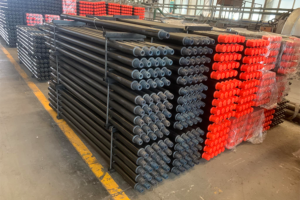
HDD Drill Rod Metal? Yeah, Let’s Talk About That.” (And Why I Gave Up Blaming the Operator)
Okay, so this is the deal. I’ve been selling drill rods for about 5 years now, and for the first 2 years of those? I was a complete liar. Not intentionally. But I’d get calls from guys in the field saying, “Hey, your rod bent like a pretzel on a 200-foot shot,” and my first thought was always, well, what did YOU do wrong? Too high thrust? Didn’t look at the mud? First-time error?
Then I’d go back to my desk and look at the steel specs and pretend I knew why a 34-ft rod all of a sudden looked like a banana.
I had it all wrong. It took getting my hands dirty. Like really dirty. Greasy elbows and safety glasses fogged up. The metallurgy was not a nerd stat for the engineers. That was the whole damn show.
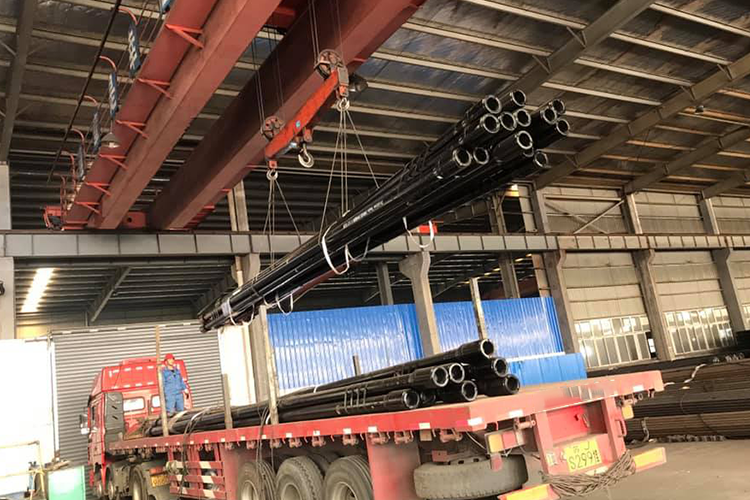
The Day I Stopped Guessing (and Asked “Why”)
I remember this one job-site in Texas. Red clay hot as a griddle and the crew was fighting a 6-inch bore under a highway. They’d lose steering every third joint with our standard rods, good rods, not cheap. The pilot bit would go where it wanted, not where the operator wanted to go. He’s cursing up a storm and I’m standing there like the factory guy who is supposed to have the answers.
So I pulled my phone out, called our metallurgist, yeah, we have one, he’s a weird dude who eats lunch at his desk, and I said, “Bob, why does this rod feel… squishy in the turn?”
And Bob goes, without missing a beat, “Because you’re bending the steel, not the hole. what’s your rockwell on that batch?
I was totally unaware. But that question turned it all on its head.
Turns out, the mix we were using, the chromium-moly mix that’s real popular because it’s tough, was too hard for that clay. Wait, what? Too difficult? I thought more was better! That’s the whole idea, isn’t it? No. A stiffer rod doesn’t noodle through the curve in that sticky, grabby ground. It resists it. It stores up all that bendy energy and then, if you try to steer it, it bounces back like an angry snake. You lose your toolface, your angle gets wonky and all of a sudden you’re two feet off grade.
That was my “a-ha!” moment. It wasn’t power. This was about personality. Every steel blend has a personality.
Current “Chewy” vs. “Crispy” Rule
Alright, here’s how I explain it to my customers now. I don’t quote chromium percentage or tensile strength numbers because, really? Your eyes get glassy. I have seen it. I have done that myself in meetings.
So I use food. Stay with me.
Some rods are “chewy” Imagine a nice, thick bagel. They bend, they give a little, they take up the stress of a tight radius and they spring back true. These ones tend to have more nickel. They are forgiving. If you’re on mixed ground, sand, gravel, some cobble, you want chewy. That rod will go where the bit leads, instead of fighting it. Steering is heavy, but responsive. You twist the rotation . You feel the rod twist . It stays twisted until you say to straighten out .
Other rods are “crunchy.” The shape of a thin pretzel stick. They are high carbon, high moly. They are stiff, they transmit torque like a laser beam, and they are brutally accurate in straight rock or hardpan. But you put a crispy rod in a tight radius? Ah crud. Or worse, it doesn’t snap, it just deflects. It bounces off the side of the bore. Because it doesn’t curve. Once I saw a crew waste eight hours because they kept pushing harder thinking the rod wasn’t going in when the fact was the steel was literally bouncing off the formation like a pool cue on a marble floor.
You don’t make a crispy rod chewy. You simply can’t. And that’s where I used to mess up—I’d tell guys, “Just ease into the turn,” not realising the steel blend was working against them before they even started.
I’m gonna be honest with you here
We do both kinds in our factory. And you know what? I’ve sold to people in the past the wrong one. Not because I was shady, but because I didn’t ask the right questions. I’d say, ‘What’s your ground like?’ And they’d say, ‘Hard. Well what the hell does ‘hard’ mean? Like concrete tough? Hard as shale? Hard as frozen dirt in January?
Now, I ask, “How does your steering feel right now?
If they say, “It’s jerky, I turn the wheel and nothing happens, and then it jumps,” that tells me they need a softer, chewier blend that absorbs the reaction torque better. The rod must twist along the whole length, not just at the connection.
If they say, ‘It’s wandering, I can’t keep it straight even with the auto-steer on,’ that tells me they’re probably in loose ground with a rod that’s too flexible. It’s dancing in the hole like a wet noodle. They need crunch. They need that high tensile stiffness that holds the line steady like a laser pointer.
You see what I mean? The metallurgy isn’t about bragging. It’s about touch. And the touch tells you everything.
The Forgotten Middle Child Manganese
Everybody’s talking about chromium and molybdenum. But manganese? That’s my sleeper. We use a particular blend of manganese in our “all-purpose” rod and it’s the closest thing to a compromise I’ve seen. Not as chewy as the nickel-heavy stuff, not as crisp as the high-carbon. It’s like the medium salsa, it works on most things, doesn’t excel anywhere.
But here’s the trick: Manganese helps with bend-fatigue. You know that micro-bending that happens every time you rotate? The rod bends and straightens and bends and straightens, a million times per barrel. That’s what kills rods, not the one big bend but the thousand little ones. A good manganese mix keeps that down. It gives the rod a longer memory, if you will.” Not harder, just slower tireer.
I had a customer in West Virginia, rocky, ugly, quartz veins that chew up tooling, that swore by our manganese rods. He’d get 30% more hours out of them than our high-end high-moly rods. Why?” Because the high moly was too hard. It was chipping at the thread roots from the vibration. The manganese was softer and absorbed the chatter, and the threads were happy. I didn’t believe him until I saw the used pipes side by side. One seemed to have been bitten by a dog. The other one just looked … tired. Preowned. But complete.
So Now What Do I Tell My Customers?
I don’t lead with the brochure these days. I start with a question: “Tell me about your worst steering day in the last month.
And I hear. If they talk about fighting the rod I know they are in the wrong blend. If they talk about fighting the ground I know they are in the right blend but might need a different heat treat.
Here’s the secret that took me five years to learn: This is a sensor. It’s telling you what the hole is doing but only if the steel is tuned to hear. A rod that does not match is deaf. It only sends noise.
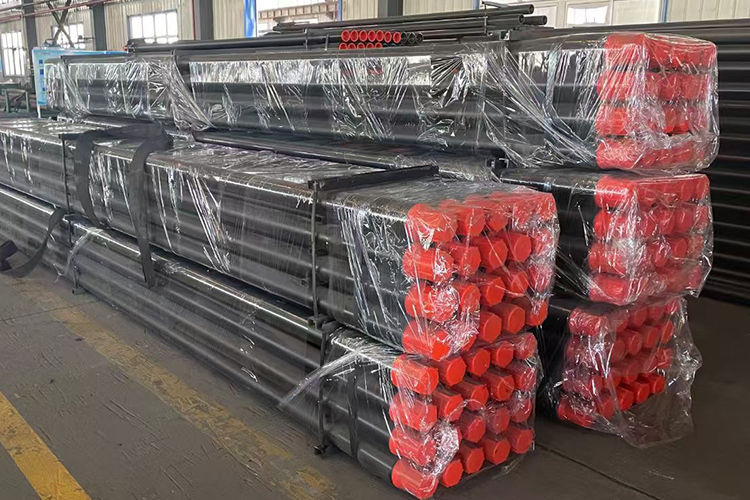
I’m not here to sell you the priciest rod we make. I’m here to sell you the one that speaks your language. If you are on sandy loam with short radii, you probably want our chewy 4140 variant with the nickel bump. If you’re in granite or urban hardpan with long straight shots, you want the crispy 4340 that don’t move.
And what if you’re somewhere in the middle? So let’s grab a coffee or a beer— I’m not judging— and take a look at your last three bore logs. I’ll tell you what I’d do. And if I’m wrong? I’ll eat my hard hat.
One Last Thing (Cause I Can’t Shut Up)
Don’t Pick the “Toughest” Rod. That’s marketing crap. Go for the right rod. I have seen “tough” rods break because they had no give, and I have seen “soft” rods last over everything because they bent with the bore vs. against it.
Metallurgy is like a good crew: chemistry, not horse power. You wouldn’t put a bulldozer operator in a backhoe trench and expect him to be happy right? Same with steel. Give it the job it wants, and it’ll make you look like a hero.
Alright, I’ll get off my soap box. But if you got a rod that’s been giving you grief ping me. I’ve probably made that mistake and fixed it myself.
SHARE:
More Posts for You
- Machine Learning for Prediction of HDD Drill Rod Failure – What is Possible?
- How bad can a dogleg be ? HDD drill rod fatigue : what are the safe limits ?
- HDD Drill Rod Steel Price Impact on Costs: 2026 Market Outlook
- OEM vs Aftermarket HDD Drill Rods: Warranty, Liability & Performance

- How a Bent Sub or Worn Saver Sub Impacts Your Whole Drill Rod Inventory
- How Much is Your Old HDD Drill Rod Worth for Scrap? (Current Pricing Knowledge)
- 7 Deadly Sins of Handling HDD Drill Rods: Dropping, Dragging, Over-Speeding
- Urban Utility Drilling: Why Shorter, Stiffer HDD Drill Rods Are Often Better