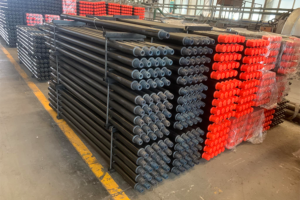
Safe Transport of HDD Drill Rods: How to Prevent Thread Damage While Transporting
You wanna know what really turns me on? Receiving a call from a customer who just took delivery of a shiny new batch of drill rods, only to learn that the threads are already chewed up before they’ve even seen a single foot of dirt. Then there’s that awkward convo where no one wants to point fingers, but we all know somewhere between our factory floor and their job site, something went sideways.
I am five years into this non-destructive drilling world and if there is one thing I have learned the hard way it is this: the most expensive part of your drill string is not the steel, it is the threads. And frankly? Most of the damage to threads is not done in the ground. It’s on the back of a truck.
So get yourself a coffee, or whatever you’re drinking, and let me walk you thru some things I wish someone would have told me sooner.
The Day That Everything Made Sense
I will never forget this incident about three years ago. A whole pallet of 4.5” rods we sent to a contractor in Texas. Good customer. Paid promptly. Knew his business. At least I thot so. He calls me up, madder than hell, saying half the pins looked like they’d been ground. I look thru the photos he sent and my stomach just drops. These were not manufacturing defects, these were classic transport bites. Scratches from steel on steel, straps that are too tight, rods bouncing off each other as if in a mosh pit.
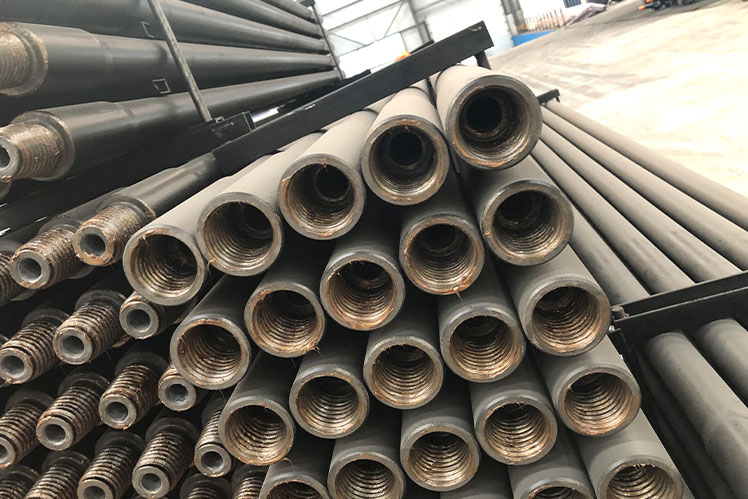
That was my “aha” moment. It’s not like I didn’t know transport could ruin threads—I did, technically. But because I realized I had assumed everyone knew that, too. Huge mistake. Gigantic. Most guys running rigs are thinking torque and mud motors and bore paths. They’re not thinking about the freight driver who strapped down those pipes for a 14 hour haul.
The Real Enemy? II. It’s Not the Road
That’s the thing no one talks about. It’s not the bumps in the road that kill your threads. It’s the static friction and the micro-movements. Your rods are strapped down tight, that’s true. But that truck frame bows. The suspension breathes. And every time that truck goes over a pothole your rods are moving a fraction of a millimeter. Now imagine that happening 10,000 times over a 500 mile trip. That is not a vehicle, that is a thread grinder in slow motion.
And the cherry on top? Most drivers don’t give a shit. No offense to the truckers, I have met some great ones, but they are not drillers. They can’t tell a box from a pin. They just look at heavy pipes, get the heaviest straps they can find and crank ’em down ’till nothing moves. That’s where the trouble begins.
My personal rules for keeping threads alive while on the road
All right, enough doom and gloom. Let’s get down to what really works. I’ve been to my share of site visits and loading docks and picked up a few tricks along the way that will save your bacon.
Rule #1: Thread Protectors Aren’t Optional (And Yes, They Do Wear Out)
I’ve seen guys run the same beat up plastic thread protectors for two years straight, I can’t tell you how many times. They’re cracked, warped, don’t snap on right anymore but hey, they’re still doing the job “kinda”. No. Just no.
Think of thread protectors as rubbers. You don’t reuse an old one and hope for the best. Replace them frequently. and for pete’s sake make sure they are the right size. A loose protector is almost worse than no protector at all, rattling around and peening the thread crests like a little hammer.
I tell my regulars budget for new protectors with every third order. It’s a pain in the neck until you add up the cost of a re-threading job. Suddenly those little plastic caps seem like a bargain of the century.
Rule #2: The Way You Stack Is More Important Than You Think
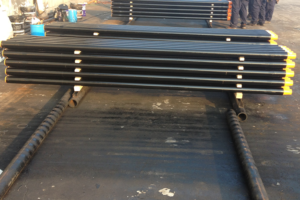
This one does me in. I’ll walk up to a trailer and see rods stacked in a pyramid and three on the bottom, two in the middle and one on top. Nice looking. Looks professional. And it’s absolutely killing the threads on the bottom layer because all that weight transfers straight down thru the pipe body and – you guessed it – right into the pin and box.
So my rule is : Lay with dunnage between layers. Wooden beams, rubber mats, hell even strips of old conveyor belt work. The idea is to spread the load so that not one rod is carrying the weight of the whole heap. And don’t stack more than four layers high unless you have some serious engineered racking. Gravity isn’t on your side here.
Rule #3: Strap Smart, Not Strong
I saw a loading crew strap four heavy duty ratchet straps across a bundle of 5 inch rods one time. They pulled till the straps sang. Looked all right. Yeah, nothing happened while I was in transit. But when they unstrapped at the job site, three of the rods had flat spots on the threads where the straps had compressed the protectors flat into the steel.
Here’s my trick: Wide, soft straps (fabric padded ones) and don’t go Hulk on the ratchets. Sorry snug is good. Bad is tight like a guitar string. And for the love of God, put your straps over the body of the rod, not over the threaded ends. I know it sounds obvious, but you would be shocked.
Now I actually carry a cheap tension gage in my truck. Sounds like overkill, but once you feel the difference between 50 pounds of strap tension and 200 you’ll never go back.
The One Thing That Tarping Never Tells You
Okay, this is my peeve. Everyone is concerned about rain and rust and they throw a tarp over the load. Great! But then they strap that tarp down tight against the rod ends. you’ve got a wind-flapping tarp against your thread protectors like sandpaper for 400 miles. By the time it reaches there the protectors are threadbare and the threads beneath are beginning to show.
My answer? Give space. Tarpaulin the body of the load but leave the threaded ends exposed or lightly covered. Even better, put breathable mesh covers on the ends so moisture can escape without the flapping action. A little surface rust flakes off. A peened thread needs to go back to the shop.
What I do before every shipment (and you should)
I’ve turned it into a personal ritual. I do a quick walk around with my phone before any load leaves our yard and record a 30 second video of the thread condition on every visible rod. I will send that to the customer. It’s two minutes. And guess what? “It’s saved my ass more times than I can say.
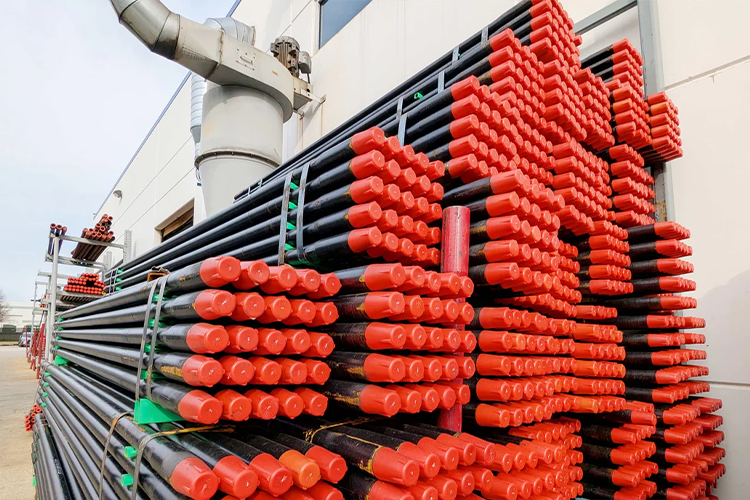
Because here’s the ugly truth: sometimes the damage happens on the receiving end. Forklifts strike bundles. Guys drop rods from the tailgate. That’s not my problem, but if the customer thinks it was in shipping, then it is my problem. You got that video proof? That’s not being paranoid. That’s being clever.
I had a customer last summer who was trying to blame us for pins damaged on a shipment. I pulled up the video I’d sent him the day we loaded. Threads clear as crystal. His face got red. It turns out that his own crew rolled the bundle off the trailer in a gravel lot with no padding. Lesson learned. He still buys from us, and now sends me unloading videos too. That’s the kind of relationship I really love.”
A Word on the Driver Relationship:
That may sound fluffy but it works. I always make sure I talk to the truck driver before he leaves. Not just handing over the paperwork, but actually having a chat. “Hey, these rods have precision ground threads that cost about the same as your monthly rent. If you hit a big bump slow down. If you have to re-tie the load give me a call. “Let me show you.”
Nine out of ten times that driver remembers me. They are a little more careful. Some will even call when they hit rough roads to ask if they should slow down. That’s cool. That is the kind of human connection that no amount of packaging can duplicate.
The Bottom Line (Stated As Non-Bottom-Liney As Possible)
Look, I’m not here trying to sell you more thread protectors or expensive shipping containers. I really do hate to see good steel go bad before it’s had a chance to work That’s why I’m here. Thread damage from transport is one of those stupid, preventable problems that makes everybody mad – the customer, the supplier, and the poor guy on the rig who has to wrestle with a sticky connection in 100 degree heat.
You have enough headaches on your jobsite. The list continues: mud conditions, steering, tracking, pump pressure. Make the ride to the site not one of those.
So next time you’re getting ready for a haul, take an extra five minutes. Inspect the protectors. Take those straps loose. “Talk to your driver.” And if you have a question, any question really, write to me. I’ve learned from the mistakes so you don’t have to.
Now go drill somethin’. Safely. With threads that work.
- The Day That Everything Made Sense
- The Real Enemy? II. It’s Not the Road
- Rule #1: Thread Protectors Aren’t Optional (And Yes, They Do Wear Out)
- Rule #2: The Way You Stack Is More Important Than You Think
- Rule #3: Strap Smart, Not Strong
- The One Thing That Tarping Never Tells You
- The Bottom Line (Stated As Non-Bottom-Liney As Possible)
SHARE:
More Posts for You
- Machine Learning for Prediction of HDD Drill Rod Failure – What is Possible?
- How bad can a dogleg be ? HDD drill rod fatigue : what are the safe limits ?
- HDD Drill Rod Steel Price Impact on Costs: 2026 Market Outlook
- OEM vs Aftermarket HDD Drill Rods: Warranty, Liability & Performance

- How a Bent Sub or Worn Saver Sub Impacts Your Whole Drill Rod Inventory
- How Much is Your Old HDD Drill Rod Worth for Scrap? (Current Pricing Knowledge)
- 7 Deadly Sins of Handling HDD Drill Rods: Dropping, Dragging, Over-Speeding
- Urban Utility Drilling: Why Shorter, Stiffer HDD Drill Rods Are Often Better