Fatigue Failure in HDD Drill Rods: Causes and Prevention Strategies
Hello folks,
It’s me, your friendly neighbourhood drilling gear guy from the factory. You know, the guy who keeps telling you to check your torque and that you can’t run your hdd drill rods like they’re bulletproof.
So I was out on a site visit the other day (yeah, I still crawl out of the office sometimes). One of my contractor buddies, call him Dave, had just pulled a string of rods out of a 500-foot bore. One of them looked perfect on the outside – nice shiny surface, no visible cracks. But I felt it, running my hand along the end of the box. That little little ‘step’ near the thread root.
“Nothing,” said Dave. “Just a little wear.”
I looked at him. “Dave, my man… that’s a fatigue crack waiting to ruin your whole week.”
And that’s the moment I want to discuss today. That tiny invisible beast? #1 It kills HDD drill rods dead. And most guys don’t even see it coming till – BAM – half a rod string is buried under a highway.
So what the hell is a fatigue failure about the HDD drill pipe?
Think of a paper clip. You bend it when it’s ok. Bend it back and forth twenty times? – And suddenly it snaps like a twig. That’s weary. Your drill rods go through the same thing. Only instead of bending with your fingers they’re being tortured by tension, compression and rotation, every single pullback and push.
The scary part? Fatigue doesn’t leave big obvious dents. It begins as tiny cracks in the steel , usually at the thread roots or where the pin meets the rod body . And one day, when you least expect it – in a max pullback or a tight curve – the whole thing lets go.
I remember my first year on the job, I thought “fatigue” was some engineering nerd term. Then I saw one of the customers rods snap at the threads while crossing under a 4 lane road. We had to use a magnet to pick up the broken piece. 3 shifts were given to him. He lost his job, the bonus, and the respect of his crew. Then I had my “aha” moment: fatigue is real. And it’s sneaky.
Okay, so what makes it happen? (No textbook BS, plain English)
Bending your rods too much. You know those tight radius curves you love to throw in? “Yeah. Anytime you go below the minimum bend radius of the rod you’re basically bending that paperclip. Do it long enough and you’re on borrowed time.
Torque surges When your reamer hits a rock or hard clay layer the torque jumps like crazy. That jolts the threads. Do that a few hundred times and the threads begin to micro-crack.
Bad makeup. If you don’t torque your connections to the spec, you’ll have loose joints. Loose joints = motion. movement = friction + fatigue . I’ve seen crews under-torque by 20% and then think, how come their threads are failing at 20,000 feet of drilling.
Wearing out rods in the wrong spot. Chuck a battered old rod in the middle of your string where all the bending is? You asked for it. The front of the string, near the bit, and the middle of the curve, see the most wear.
So how do you combat it? (Without selling you a magic wand)
First to turn your rods. Don’t keep using the same three rods at the front until they die. Mark them, follow them, swap them. Some guys paint a stripe on every 5th rod and move them back in the string every few jobs. Works like a dream.
Second, note the bend radius. I know, I know, the jobsite says go tighter. But if the math says your rod can do 100 feet radius and you push it to 80 you’re killing it faster. .
Third, check it like a paranoid freak. Every time you finish a job, clean off the threads and feel for those tiny steps or ridges. Break one rod early and that rod is done but you save the rest of the string. Don’t be Dave.
Tighten the nuts properly. Not “sorta tight.” Not “as tight as I can affect”. Use a torque wrench or hydraulic tongs. And match your rod specs — do not mix a 40,000 ft-lb rod with a 20,000 ft-lb rod in the same string. That’s like putting racing tyres on a mini-van.
Finally, retire hdd drill rods on time.
I know they’re pricey. I know you don’t like to waste money. But one broken rod can cost you ten times what a new one costs in downtime, fishing tools and headache. Limit footage – say, 150,000 feet of drilling per rod – and stick to it.
I make a living by selling rods. I’d love to tell you “Buy our super durable ultra fatigue proof rods and never worry again.” But that’s not true. Eventually all rods die. The trick is to have them die of old age, not a violent snap in the middle of a bore.
So the next time you’re making up your string just ask yourself “Am I being a Dave right now?
Stay safe and keep those threads clean out there!
A drilling nerd from a back factory
SHARE:
More Posts for You
- Machine Learning for Prediction of HDD Drill Rod Failure – What is Possible?
- How bad can a dogleg be ? HDD drill rod fatigue : what are the safe limits ?
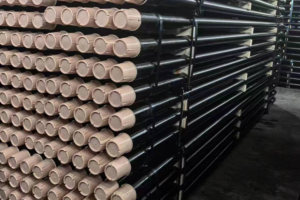
- HDD Drill Rod Steel Price Impact on Costs: 2026 Market Outlook
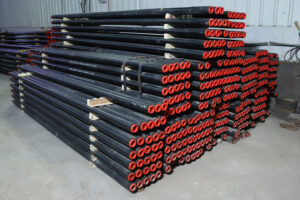
- OEM vs Aftermarket HDD Drill Rods: Warranty, Liability & Performance

- How a Bent Sub or Worn Saver Sub Impacts Your Whole Drill Rod Inventory
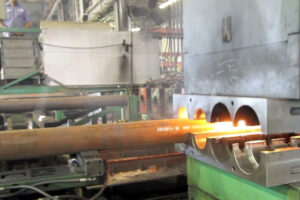
- How Much is Your Old HDD Drill Rod Worth for Scrap? (Current Pricing Knowledge)
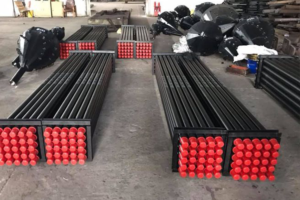
- 7 Deadly Sins of Handling HDD Drill Rods: Dropping, Dragging, Over-Speeding
- Urban Utility Drilling: Why Shorter, Stiffer HDD Drill Rods Are Often Better