How Long Does an HDD Drill Rod Really Last? (We Should Talk About It)
Get a cup of coffee and sit down. I wanted to write this for a long time because it’s probably the most common question I get from you guys, whether we’re talking at a trade show or you’re calling me after a long day on the rig.
“Hey, how long should these rods last?”
It’s a simple question, right? But the answer is anything but simple. For years, I gave the same boring, safe answer that every salesperson gives: “Well, it depends on maintenance, ground conditions, operator care…” Blah, blah, blah. Is that true? Yes. But it felt like I was hiding behind a textbook, like I was trying to avoid something.
One day, though, I had a lightbulb moment that changed how I talk about drill rod life for good.
The Day Dave Made Me Change My Mind
I was on a site visit in the middle of nowhere, watching a group of people break through some really bad rock. Dave, the operator, was an old-timer who had probably been drilling since before I was born. His rig was muddy, but it was running like a Swiss watch.
His rod string looked like it had been through a lot of trouble. There were chips, dings, and rust spots all over the paint. This thing had character. “Dave, how old are those rods?” I asked him.
He just shrugged. “I don’t know. “Five or six years, maybe?”
I almost choked. “Six years? In this area? “You’ve got to be kidding.”
He smiled at me and said, “They’re not pretty, but they haven’t killed me yet.”
And that’s when it hit me. The question we’re asking isn’t right. It’s not “how many years?” It’s “how many miles?”
Years Are a Lie—Let’s Talk About What Really Wears Out a Rod
Take a moment to think about it. A rod that has been in soft clay for its whole life and has been taken care of by a careful operator could last ten years. If a rookie is using it on broken rock and abusing it, another rod made of the same steel and heat-treated the same way could be toast in two years.
It’s like asking how long a pair of work boots will last. It depends on whether you’re walking on carpet or crawling over rebar all day, right?
This is what really kills rods:
Stress: Every time you bend, cycle, or push the limits, you’re putting micro-stress into the steel. It all adds up.
Corrosion: Mud, water, and chemicals all eat away at the surface. A crack can start from even a small rust pit.
Dings and Dents: You drop a rod on the rack, hit it with a rock, or do something else. That small hole is a magnet for stress.
Thread Wear: If you don’t clean and grease your threads, you’re basically sanding them down every time you make a joint.
I have seen rods that looked brand new break on a regular basis because they were worn out but not visible. And I’ve seen old, beat-up dogs keep going because the operator paid attention to the machine and knew when to back off.
My own “Oops” moment (and why I still cringe)
I have to tell you a story that still makes me cringe. I had to cross a river early in my career, and the deadline was tight and the pressure was high. We were pushing that rig to the limit, maybe a little over the limit. I thought I was a hero. We finished the hole and gave each other high-fives.
A few weeks later, on a simple, easy bore—like, baby stuff—SNAP. There was a break in the middle of the string. We lost a day of work and $600 on a rod.
It turns out that the work on that river caused the damage. I had pushed the metal too far, making tiny cracks that were just waiting for the right moment to break. When I was a cowboy, the rod didn’t break. It broke later, when I wasn’t even pushing hard. I remembered that lesson.
So, how do you keep them going longer? (It’s Boring Stuff)
I’m not going to give you a list that sounds like a safety manual. But I’ve seen some smart operators do things that make a big difference:
Grease, grease, and more grease. Yes, it’s a pain. Yes, you are tired. But dry threads are the quickest way to break a rod.
Keep an eye on your pressures. If you always push yourself to the limit, you’ll pay for it later.
Check on a regular basis. Not a fancy NDT, just a good look. Check for rust pits, dings, and bent areas.
Change the direction of your string. Don’t always use the same five rods at the front. Share the love.
I have customers who get seven or eight years out of a set because they take care of them. And some people who change every three because they’re running hard on tough rock. Both are “normal.”
The Bottom Line (Without Saying “In Conclusion”)
So the next time someone asks you how long a drill rod lasts, just say, “It depends on what it’s been through.”
Don’t worry about the calendar. Think about the stories that rod could tell about the boulders, the sharp turns, and the late nights. It will take care of you if you take care of it.
If you ever see Dave at work, ask him about his rods. He’ll probably just laugh and say that they’re still going.
Have fun drilling, and for the love of God, grease those threads.
SHARE:
More Posts for You
- Machine Learning for Prediction of HDD Drill Rod Failure – What is Possible?
- How bad can a dogleg be ? HDD drill rod fatigue : what are the safe limits ?
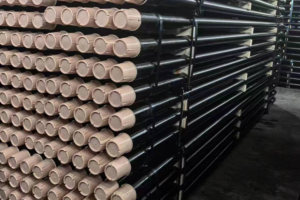
- HDD Drill Rod Steel Price Impact on Costs: 2026 Market Outlook
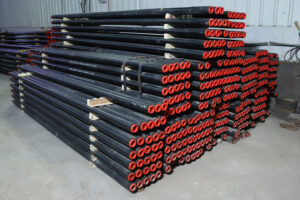
- OEM vs Aftermarket HDD Drill Rods: Warranty, Liability & Performance

- How a Bent Sub or Worn Saver Sub Impacts Your Whole Drill Rod Inventory
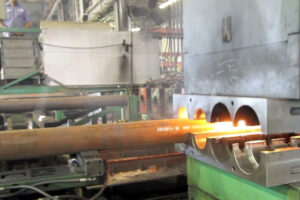
- How Much is Your Old HDD Drill Rod Worth for Scrap? (Current Pricing Knowledge)
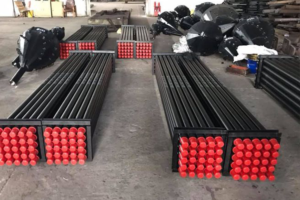
- 7 Deadly Sins of Handling HDD Drill Rods: Dropping, Dragging, Over-Speeding
- Urban Utility Drilling: Why Shorter, Stiffer HDD Drill Rods Are Often Better