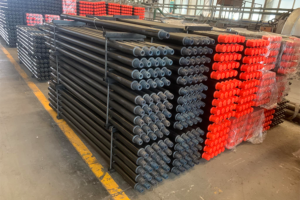
Do you think you know how HDD drill rods are made? (I Didn’t Either)
You know that feeling when you’ve been selling something for years, you can list the specs in your sleep, but you’ve never actually seen how the thing is made?
That was how I was until about six months ago.
I’ve worked in this field for five years. Five years of talking about tensile strength, weld integrity, and why our rods don’t break like pretzels when they are under pressure. I thought I knew what our product was. Then I really walked around the factory floor while they were making things, and to be honest? I thought I was stupid.
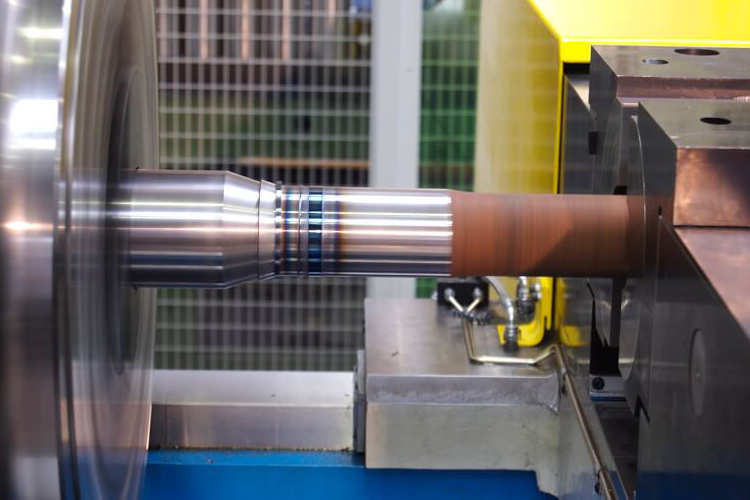
We abuse HDD drill rods for a living, so here’s the deal. We push them through rock, under rivers, and into the ground, and then we get mad when they break. But seeing how they come together? It changed the way I talk to customers.
The “Holy” Moment
So, imagine this: I’m standing next to our production lead, a guy who’s been doing this for 25 years and hasn’t said more than three words to me all morning. We’re watching a piece of steel heat up, and I’m talking to him about nothing, asking stupid questions like, “So, this is the good steel?”
He just stares at me. “It’s not the steel.” We do something to it.
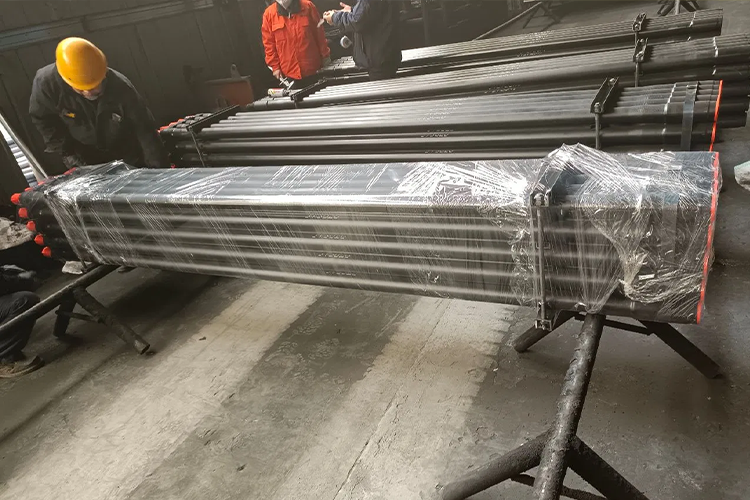
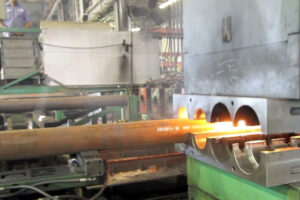
After that, he points to the forge. And I watch this solid piece of metal get shaped by a hammer so powerful that I could feel it in my chest. Not made by a machine. Not cut. Beaten.”Why don’t you just cut it?” I said.
He nearly smiled. “Because the pounding lines up the grain structure. Cutting stops it. Do you want a rod that bends or one that lasts?
And that’s when it all made sense. I finally understood all the times customers asked me why my prices were higher than the other guys’. It’s not just the steel. It’s about whether you bend that steel or just carve it.
The Part That No One Talks About
The straightening process is something I never thought about in five years of selling.
You might think that modern factories have some kind of magic laser-guided system that makes everything perfect. Nope. There is a person after the rod has been welded and treated. A real person. They sit there with gauges and check each rod. If it’s off by a few millimeters, they fix it by hand.
I saw this guy, who looked to be about 60, running his hand along a rod like he was reading braille. He found a bend that I couldn’t see even if my life depended on it. Made a small change, and the rod was perfect.”You can’t teach that,” the production lead said in a low voice. “That’s forty years of feeling.”
We talk about thread coatings, hard facing, and all the other technical things for a long time. But in the end, it’s up to an old-timer who knows when it’s right to make your rod work.
The Threads Will Get You
So, this is the part that keeps me up at night now.
You know how we all complain when rods break? We can blame the steel, the drilling conditions, or even the phase of the moon.
Sometime, watch a rod being threaded.
The threading process is scary. This machine cuts these perfect spirals into the end of a rod that will be able to handle a lot of pullback. If that thread is just a little bit off? Your connection is shaky. What if your connection wobbles? Hi, washout.
I asked about how much it could take. It was so small that I couldn’t even think about it. It looks like it’s smaller than a human hair.
And here’s the best part: they don’t just thread it and send it. They check to see if every rod fits with another rod. Tightened by hand. By that same quiet guy who probably hasn’t had a bad connection in decades.
So, why should you care?
Hey, I’m not here to tell you that our rods are magic. They are made of steel. If you push them hard through rock, they’ll wear out eventually.
But this is what I really learned from watching these things:
That less expensive rod from the random seller? It probably didn’t get pounded into shape. It probably got cut off. What about that thread? No one checked it by hand against another rod.
There is no magic in the difference. It’s just paying attention to things you can’t see, like in the old days.
Remember that the next time you pull back and your rod is screaming under pressure, some quiet guy with calloused hands probably ran his fingers along that thread months ago and thought it was good enough for you.
It changes the way you think about the equipment, doesn’t it?
SHARE:
More Posts for You
- Machine Learning for Prediction of HDD Drill Rod Failure – What is Possible?
- How bad can a dogleg be ? HDD drill rod fatigue : what are the safe limits ?
- HDD Drill Rod Steel Price Impact on Costs: 2026 Market Outlook
- OEM vs Aftermarket HDD Drill Rods: Warranty, Liability & Performance
- How a Bent Sub or Worn Saver Sub Impacts Your Whole Drill Rod Inventory
- How Much is Your Old HDD Drill Rod Worth for Scrap? (Current Pricing Knowledge)
- 7 Deadly Sins of Handling HDD Drill Rods: Dropping, Dragging, Over-Speeding
- Urban Utility Drilling: Why Shorter, Stiffer HDD Drill Rods Are Often Better