Why Your Million-Dollar HDD Rig is Only as Good as the Pipe You Screw Into It
I gotta be honest with you—there was a time early in my career when I thought drill pipe was just… well, pipe. You know the mentality. You’ve got a shiny new (or well-loved) HDD rig sitting there, tons of torque, fancy electronics, and you just need something to connect the machine to the hole.
I learned the hard way that thinking like that will absolutely murder your bottom line. Not to mention your sanity.
I was on site years ago with a customer—let’s call him Dave—who was cursing up a storm because his JT100 (or whatever big iron you want to picture) kept snapping rods. He blamed the ground. He blamed the mud. He blamed the phases of the moon. But when we actually sat down and looked at the spec sheets, the lightbulb moment hit us both like a two-pound hammer.
His rig was literally too strong for his pipe.
About Torque
Here’s the thing that article from Ditch Witch nailed . If your drill has too much rotary torque for the specific drill pipe you’re running, you have to “de-rate” the machine. You’re basically driving a Ferrari in a school zone because your tires can’t handle the speed.
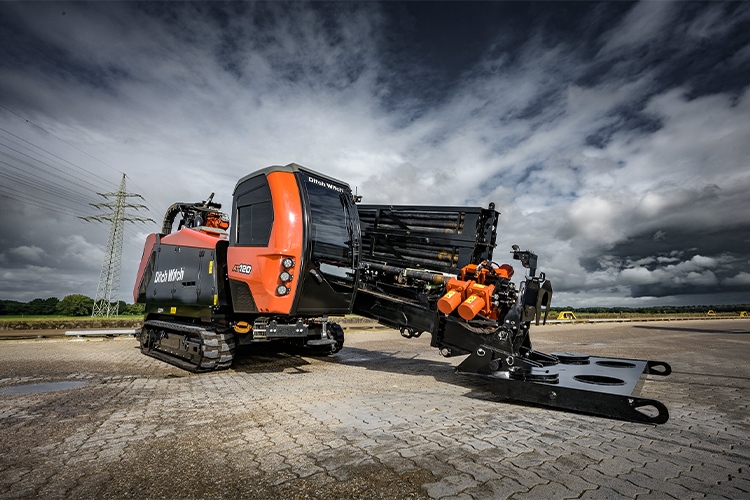
When that happens, you’re either snapping pipe because you’re sending a nuke downhole when the rod can only handle a firecracker, OR—if you’ve got too little torque—the pipe keeps breaking loose downhole because it wasn’t made up properly at the surface .
Dave was over-torquing his connections without even realizing it. The machine was doing what it was built to do, but the pipe was screaming “uncle” because it wasn’t designed for that specific thread profile or makeup torque.
That day, we stopped talking about “pipe” and started talking about the drill string system.
It’s Not Just About Strength, It’s About “Feel”
Now, when guys come to me and ask, “What rod should I buy?” I don’t just throw the S-135 spec sheet at them . Yeah, S-135 is the gold standard for maxi-rigs because it’s tough—135,000 PSI minimum yield strength—but toughness isn’t just a number on a page.
There’s a concept in the industry called torsional stiffness .
Imagine you’re 5,000 feet into a bore, trying to steer. You twist the pipe at the rig, but if the pipe is too “wrappy” (low torsional stiffness), that twist doesn’t make it to the bit at the other end. You lose the “high side.” You’re flying blind.
We ran into this on a river crossing job. We had a 5-inch string that just wouldn’t hold orientation. We swapped to a 5-1/2 inch string with the same wall thickness, and suddenly the steering was crisp. The pipe was stiffer. It transmitted the energy better . That’s the stuff you don’t see in the brochure, but you feel in your seat.
The “Universal” Myth
I hear this a lot: “Just give me the universal pipe that fits everything.”
Look, I sell pipe. I’d love to tell you that one box of rods works on your Ditch Witch, your Vermeer, and your uncle’s homemade rig. But that’s like saying one pair of boots fits every hike. Sure, you can technically put them on, but your feet are going to bleed by mile three.
There are guys out there making great “universal” rods that fit multiple brands . But “fit” doesn’t always mean “optimized.” You have to look at the thread root, the taper, the make-up torque.
If the thread profile on the pipe doesn’t match the drive chuck or the sub saver on your rig perfectly, you’re going to get “stabbing damage.” You’ll flare the boxes, mushroom the pins, and suddenly you’re retiring pipe years before you should .
Bending Radius Will Haunt You
Okay, rant time. There’s a myth that if you bend the pipe a little too much and it doesn’t break immediately, you’re fine. Wrong.
I love how Al Chancellor put it in Trenchless Technology: exceeding the bend radius doesn’t always snap the pipe on the spot. It just “initiates the damage process” . It’s like bending a paperclip back and forth once—it looks fine. But that metal is tired. It’s compromised. And it will fail on the next easy bore when you least expect it.
I’ve seen guys oversteer, not see a kink, and then six months later they’re fishing a string out of a hole because of microfractures that started months ago. Know your pipe’s bend radius. Live by it.
So, What Do I Actually Look At?
If you’re shopping for pipe (new or used), here’s the shortlist of what I nag my customers about:
- The Connection: Double-shoulder connections are your friend. They add about 30% more strength and prevent over-torque nightmares .
- Tong Space: If you’re buying used, measure the “usable tong length.” If there’s hard banding where your rig’s vises need to grip, you can’t make it up properly . I learned this one the hard way when a customer’s vise kept slipping because the hard band was exactly where the dies needed to bite.
- The Upset: Look at where the tube meets the tool joint (the upset area). A longer, smoother transition reduces stress concentration. Cheap pipe has a short, abrupt upset. Good pipe has a long, gradual one .
- Hard Banding: If you’re in rock, get it. If you’re in sand, save your money. It’s that simple .
At the end of the day, your drill pipe is the most expensive wear part on your rig . Treat it like one. Don’t just buy what’s in stock. Buy what actually matches your machine.
Alright, stepping off my soapbox. Anyone got any good war stories about a pipe mismatch? I’m all ears.
SHARE:
More Posts for You
- Machine Learning for Prediction of HDD Drill Rod Failure – What is Possible?
- How bad can a dogleg be ? HDD drill rod fatigue : what are the safe limits ?
- HDD Drill Rod Steel Price Impact on Costs: 2026 Market Outlook
- OEM vs Aftermarket HDD Drill Rods: Warranty, Liability & Performance
- How a Bent Sub or Worn Saver Sub Impacts Your Whole Drill Rod Inventory
- How Much is Your Old HDD Drill Rod Worth for Scrap? (Current Pricing Knowledge)
- 7 Deadly Sins of Handling HDD Drill Rods: Dropping, Dragging, Over-Speeding
- Urban Utility Drilling: Why Shorter, Stiffer HDD Drill Rods Are Often Better