Before the Drill Starts: Your Essential HDD Pre-Construction Checklist
So, you’ve chosen Horizontal Directional Drilling (HDD) for your next utility installation project. Smart move. HDD minimizes surface disruption, is environmentally friendly, and is perfect for navigating under roads, rivers, and existing infrastructure.
But the success of any HDD operation isn’t determined when the drill bit starts turning—it’s determined weeks or months before, during meticulous pre-construction planning.
Jumping in unprepared is a recipe for costly delays, damage, or even project failure. To ensure a smooth, safe, and successful bore, here’s your essential checklist of what needs to happen before the drill rig ever rolls onto the site.
The Foundational Phase: Investigation & Planning
This is arguably the most critical stage. Garbage in = garbage out.
- Comprehensive Utility Locates: This is non-negotiable. Contact all relevant utility companies (811 or your local equivalent) to have public lines marked. But don’t stop there. Hire a private subsurface utility engineering (SUE) firm to use advanced techniques like vacuum excavation (potholing) to positively confirm the exact depth and location of all utilities in the proposed drill path. Knowing what’s not on the maps is just as important.
- Detailed Geotechnical Investigation: You must understand what you’re drilling through. Conduct soil borings along the planned alignment to analyze soil types, rock content, grain size, groundwater conditions, and the presence of cobbles or boulders. This report dictates your choice of drill rig, drilling fluid mix, tooling, and pullback strength.
- Permitting & Regulations: Secure all necessary permits from municipal, environmental, and transportation authorities. This often includes environmental impact assessments, road/right-of-way permits, and dewatering permits for drilling fluid management. Understand local regulations regarding drilling fluid (mud) containment, disposal, and spill prevention.
The Design & Engineering Phase
With data in hand, you move from “what is it?” to “how do we do it?”
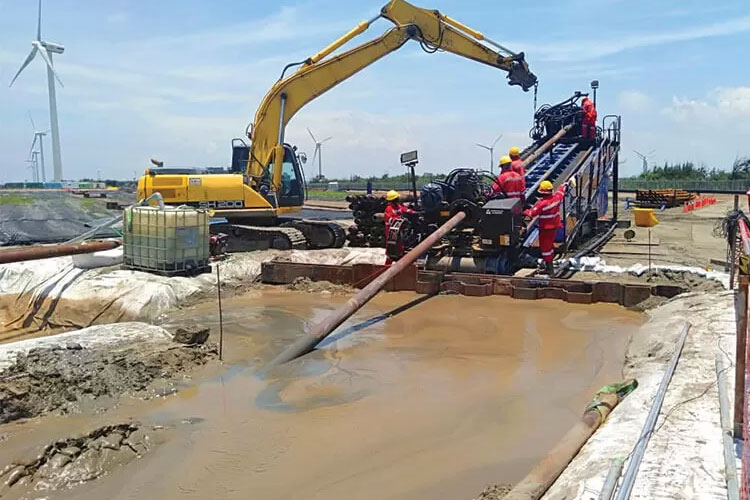
- Path Profile Design: Engineers design the precise drill path, determining the entry and exit points, depth, curvature radius, and the required clearance from existing utilities. The design must balance constructability with safety and regulations.
- Drilling Fluid Plan: Drilling fluid isn’t just mud; it’s the lifeblood of the HDD process. Based on the geotech report, develop a fluid mix plan to stabilize the borehole, lubricate the product pipe, and transport cuttings. Plan for its storage, mixing, recycling, and final disposal or cleanup.
- Equipment & Tooling Selection: Choose the right-sized rig (based on pullback force required), drill pipe, downhole tools (mixers, reamers), and tracking/locating system (walkover or wire-line gyro). Ensure backup tools and critical spare parts are available.
- Risk Assessment & Contingency Planning: Hold a pre-construction meeting with all key personnel. Identify potential risks (utility strike, fluid frac-out, borehole collapse) and document clear contingency procedures. Everyone should know their role if things don’t go as planned.
The On-Site Preparation Phase
The site is ready to transform from a plan into a active worksite.
- Staging Area Setup: Designate ample space for the drill rig, fluid mixing/recycling units, the product pipe string, pipe handling equipment, and support vehicles. Ensure ground conditions can support heavy equipment, using mats if necessary.
- Entry & Exit Pit Preparation: While HDD doesn’t need a trench, prepared entry and exit areas are crucial. The exit side (where the pipe is pulled back) often requires a pre-excavated trench or roller cradle to support the pipe during pullback.
- Environmental Controls: Install silt fencing, sediment traps, and secondary containment for fluid tanks. Have spill kits readily accessible. Protect sensitive areas clearly.
- Communication & Safety Briefing: Establish clear radio communication channels between the drill operator, locator, pipe side crew, and traffic control. Conduct a final daily safety huddle (toolbox talk) covering the day’s tasks, hazards, and emergency protocols.
The Final Go/No-Go Checklist (Morning of Launch):
- All utilities positively located and potholed at critical points?
- All permits on site and visibly posted?
- Drill path clearly surveyed and marked on the surface?
- Locator calibrated and in sync with the drill rig’s transmitter?
- Drilling fluid mixed and tested for the first soil segment?
- Product pipe inspected, staged, and ready for pullback?
- All personnel briefed and safety gear checked?
- Traffic control measures (if any) fully implemented?
The Bottom Line:
HDD is an engineering marvel, but it’s not magic. It’s a predictable science that thrives on preparation. The time and investment spent in the pre-construction phase directly correlate to the efficiency, safety, and profitability of the drill itself. By methodically working through this checklist, you’re not just planning a bore—you’re paving the way for a silent, successful, and uneventful installation.
Do the work upfront, and the drill will do the work underground.
SHARE:
More Posts for You
- Machine Learning for Prediction of HDD Drill Rod Failure – What is Possible?
- How bad can a dogleg be ? HDD drill rod fatigue : what are the safe limits ?
- HDD Drill Rod Steel Price Impact on Costs: 2026 Market Outlook
- OEM vs Aftermarket HDD Drill Rods: Warranty, Liability & Performance
- How a Bent Sub or Worn Saver Sub Impacts Your Whole Drill Rod Inventory

- How Much is Your Old HDD Drill Rod Worth for Scrap? (Current Pricing Knowledge)
- 7 Deadly Sins of Handling HDD Drill Rods: Dropping, Dragging, Over-Speeding
- Urban Utility Drilling: Why Shorter, Stiffer HDD Drill Rods Are Often Better